 Nestward
Where to Stay Near the Grand Canyon
Picking a basecamp for the South Rim: lodges, campgrounds, and gateway towns.
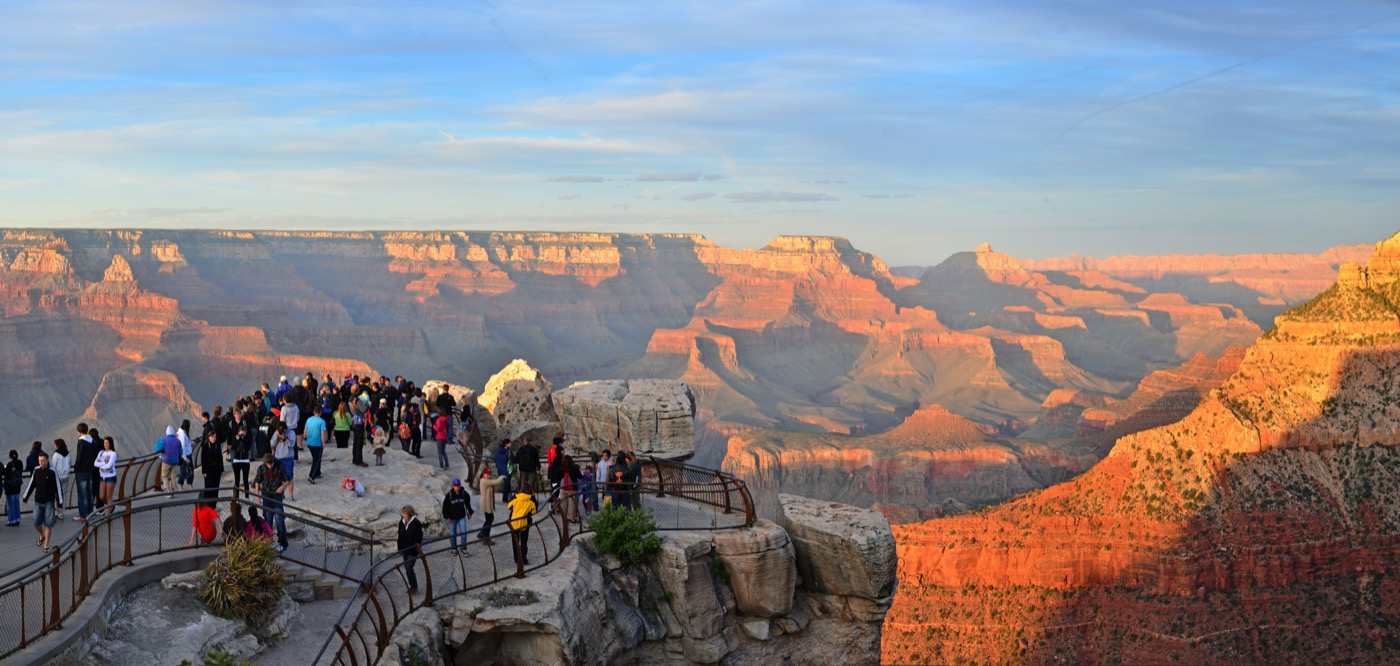
The Grand Canyon sits entirely in Arizona and stretches across 278 miles of the Colorado River, a mile-deep canyon with rims that are nowhere near each other. Where you sleep makes or breaks the trip, because the difference between "walk to the rim at sunrise" and "drive 90 minutes each way" comes down to one booking decision. Here's the full picture of your options, all centered on the year-round South Rim.
In-park lodges: the convenience play
Staying inside the park, in Grand Canyon Village, means you can walk to the rim before the day-trippers arrive and after they leave. That window (early morning and dusk) is the whole reason to do it. You're steps from the Bright Angel Trailhead and historic spots like Kolb Studio, the cliff-edge home-turned-museum where the Kolb brothers ran their photography business for 73 years.
- Pros: Walkable to the rim, the free shuttle network, and the Grand Canyon Visitor Center. No entrance-line stress each morning (the South Entrance near Tusayan can run a two-hour wait between 9:30 and 4). You catch sunrise and sunset without a car.
- Cons: Rooms book out 6–13 months ahead, especially the historic lodges on the rim. Prices are firm and the rooms are dated in places. Dining options are limited to what's in the village.
- Best for: Anyone who wants the canyon at golden hour and is willing to plan far in advance.
South Rim campgrounds: closest to the canyon for less
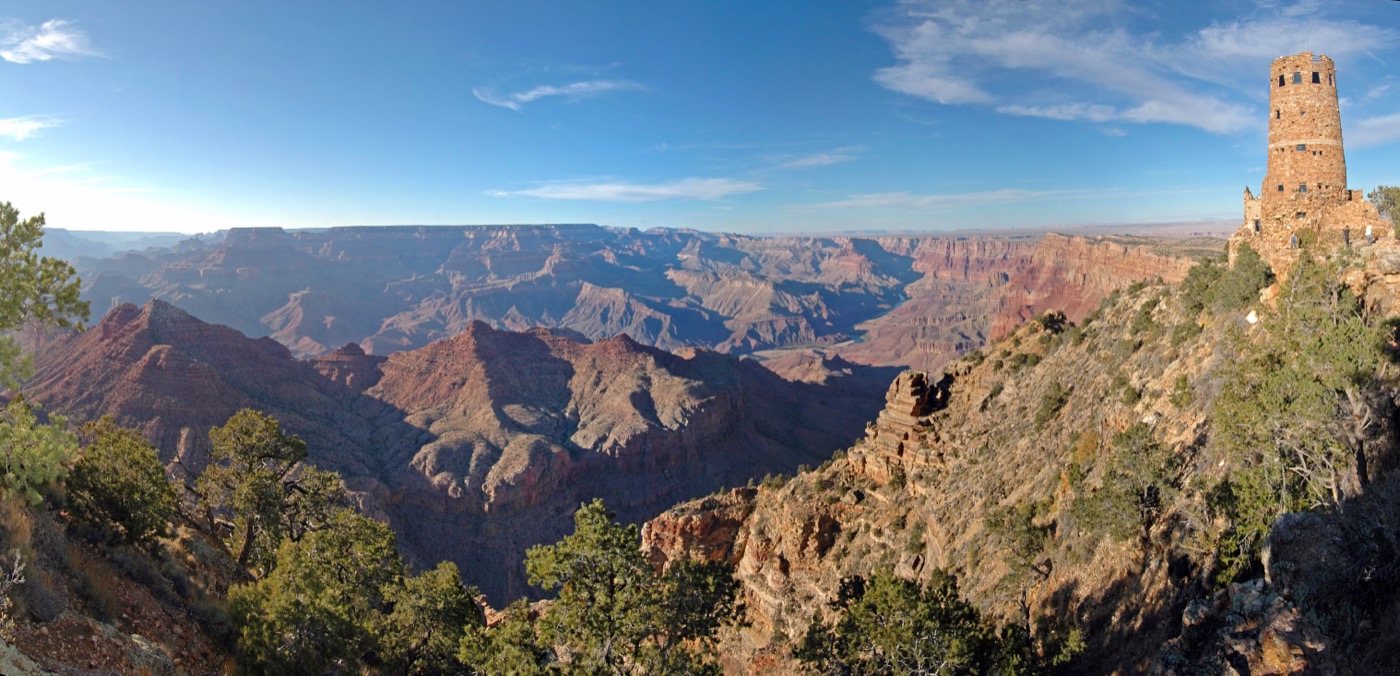
Camping inside the park gets you the same early-and-late rim access as the lodges, at a fraction of the cost. Mather Campground in the village is the main developed option and takes reservations. Out at the East Entrance, Desert View Campground runs roughly April through mid-October and sits next to the Desert View Watchtower, with a quieter, more spread-out feel. Reservations required.
- Pros: Cheapest way to sleep inside the park. Walkable or short-shuttle to the rim. Desert View gives you "first views" of the canyon and the Colorado River right outside camp.
- Cons: The rim sits between 7,000 and 8,000 feet, so nights are cold well into spring and summer. Mather books up fast. Desert View is seasonal and 25 miles east of the main village. Kids and tents at altitude need warm layers you might not pack for "Arizona."
- Best for: Families and budget travelers who want rim access without lodge prices, and don't mind cold mornings.
Tusayan: just outside the gate
Tusayan is the small strip of hotels right outside the South Entrance, about 10 minutes from the visitor center. It's the closest non-park bed you'll find, and in peak season a free shuttle runs from town into the park so you can skip the entrance line.
- Pros: Modern hotel rooms, chain-brand reliability, and you're at the rim in 15–20 minutes. Easier to book than in-park lodging.
- Cons: It's a tourist strip, not a town, with limited character and inflated prices for what you get. You're still outside the gate, so very early sunrise trips mean driving in before the shuttle runs.
- Best for: Travelers who want canyon proximity with a real hotel bed and couldn't get in-park rooms.
Williams and Flagstaff: more town, more drive
If you want restaurants, real grocery stores, and lower prices, base in Williams (about an hour south via Route 64) or Flagstaff (about 80 miles southeast via Route 180). Williams is the home of the Grand Canyon Railway, which runs a train to the rim, a genuinely fun option with younger kids that skips the parking and driving entirely.
- Pros: More lodging choices and price points, actual dining, and Route 66 charm in Williams. Flagstaff adds breweries, a college-town feel, and easy access to other sites. The Williams train is a kid-pleaser.
- Cons: You're committing to a real daily drive, and you'll likely hit that South Entrance line mid-morning. You lose sunrise and sunset at the rim unless you're willing to drive in the dark.
- Best for: Travelers doing the canyon as a day trip within a bigger Arizona loop, or anyone who values a comfortable town over rim proximity.
A quick word on the North Rim
The North Rim is gorgeous, higher, cooler, and far emptier, but it's only open seasonally (roughly mid-May through fall, with limited access in late autumn) and it's a long way from the South Rim by road. Don't plan to "see both" in one short trip. Pick the South Rim for a first visit; it's open all year and has the lodging, shuttles, and services.
Planning the trip? Nestward builds a day-by-day plan in minutes, free, no subscription. See how it works →