 Nestward
The Best Easy Hikes in the Grand Canyon
Short rim walks with big payoffs, and the truth about going down.
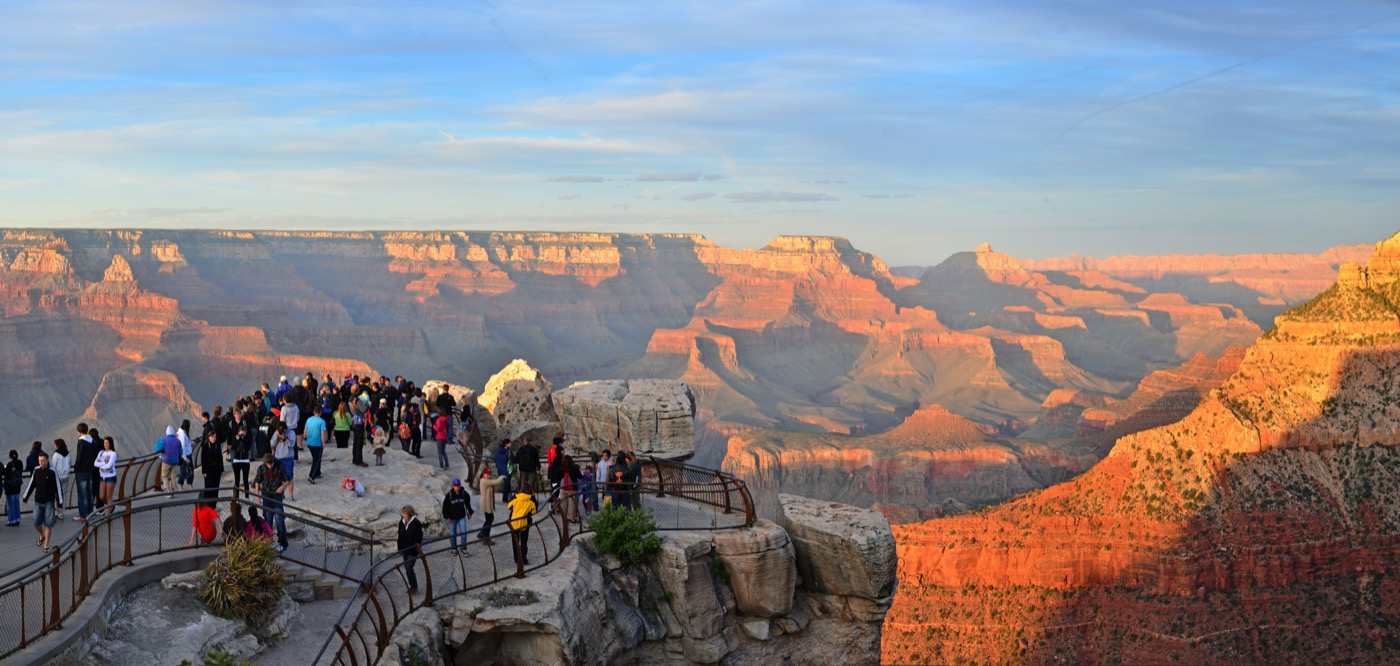
The Grand Canyon is a mile-deep canyon carved into the high desert of northern Arizona, and the good news for families is that its best easy hikes mostly run along the rim, not down into it. You don't have to descend a single switchback to be stunned. Here's how to get the most out of short, flat-ish walks, and where to draw the line before a trail turns into a grind.
The Rim Trail: the easiest walk with the biggest reward
If you do one hike here, make it a stretch of the Rim Trail. It's mostly flat, mostly paved, and follows the South Rim's edge for about 13 miles total, but the beauty is you can hike any slice of it and turn back whenever you want.
- Mather Point to Yavapai Point: roughly 0.7 miles one way, paved and easy. This connects the main Grand Canyon Visitor Center to the Yavapai Geology Museum, where you can step inside for the air conditioning and the 3-D canyon model.
- The Trail of Time: a paved interpretive stretch between Yavapai and Verkamp's where each meter of walking represents a million years of canyon history. Kids tend to like the bronze rock markers. It turns a walk into a scavenger hunt.
- Shuttle one way, walk the other: the free Kaibab Rim (Orange) shuttle stops at points along the eastern Rim Trail. Ride out, walk back at your own pace, and bail to a bus stop if little legs give out.
Grand Canyon Village: short, historic, and shaded
The western end of the Rim Trail runs through the Historic District, where the walking is short and the buildings give you reasons to stop. From the Bright Angel Trailhead you can stroll east past Kolb Studio, a five-story house perched right on the rim, now a free museum with the Amazing Kolb Brothers exhibit and a 1912 film of the brothers running the Colorado River. It's a flat, ten-minute walk that breaks up the day.
This end is also where you'll find lodges, restrooms, and water-filling stations close together, which matters more than it sounds when you're traveling with kids.
Going below the rim: where "easy" ends
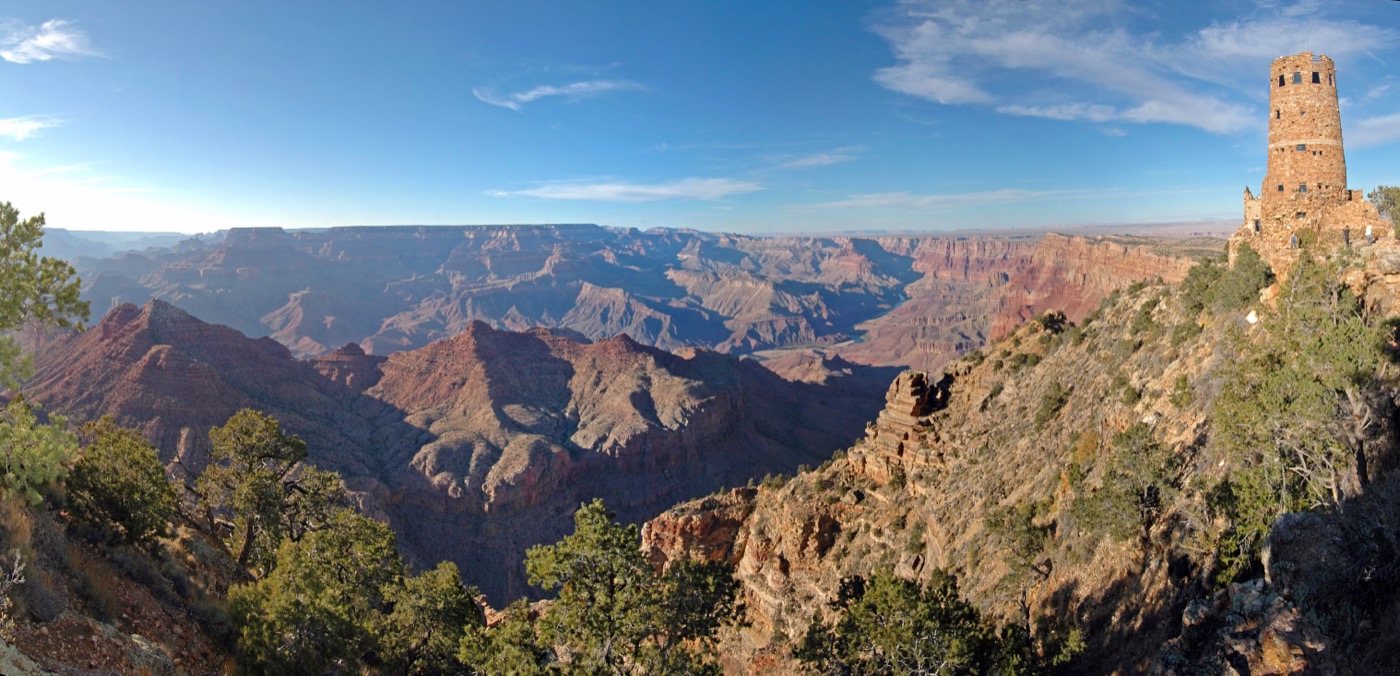
The famous corridor trails (Bright Angel and the South Kaibab) drop steeply into the canyon. They're spectacular, but be honest with yourself: the way down feels easy, and the way back up does not. The Park Service is blunt about this, and you should be too.
- Bright Angel Trail to the first switchbacks: a short out-and-back gives you a taste of going below the rim without committing. Turn around well before you're tired. Climbing out always takes about twice as long as the descent.
- Never try to hike to the river and back in one day. That's a serious mistake, not a stretch goal, especially with children.
- Carry water and snacks even on short below-rim walks. There's little to no shade, and temperatures inside the canyon run 20 to 30 degrees hotter than on the rim.
Timing, heat, and getting in
The South Rim sits around 7,000 feet, so you'll feel the altitude and the sun. Summer afternoons are hot and crowded; mornings and late afternoons are cooler and the light is better. The South Entrance near Tusayan backs up badly between 9:30 am and 4 pm, with wait times that can hit two hours, so arrive early or enter via the quieter East Entrance at Desert View.
- Entrance fee: $35 per private vehicle, good for seven days.
- Best time for easy hiking: spring and fall, when the rim is mild and the crowds thin. Winter is cold and snowy but quiet and beautiful.
- Free ranger add-on: the 30-minute Geology Talk at the Yavapai Geology Museum (3:00 pm daily, seasonal) pairs perfectly with a Rim Trail walk and explains what you're looking at.
- Kid pacing: plan in short legs with a clear turnaround, keep a water bottle on everyone, and use shuttle stops as escape hatches. The South Rim is open all year; the North Rim has very limited seasonal access.
Planning the real thing? Nestward builds a day-by-day plan for this park in minutes, free with no subscription. See how it works →