 Nestward
Seeing the Grand Canyon Without the Big Hikes
A South Rim plan built around viewpoints, scenic drives, and short paved walks.
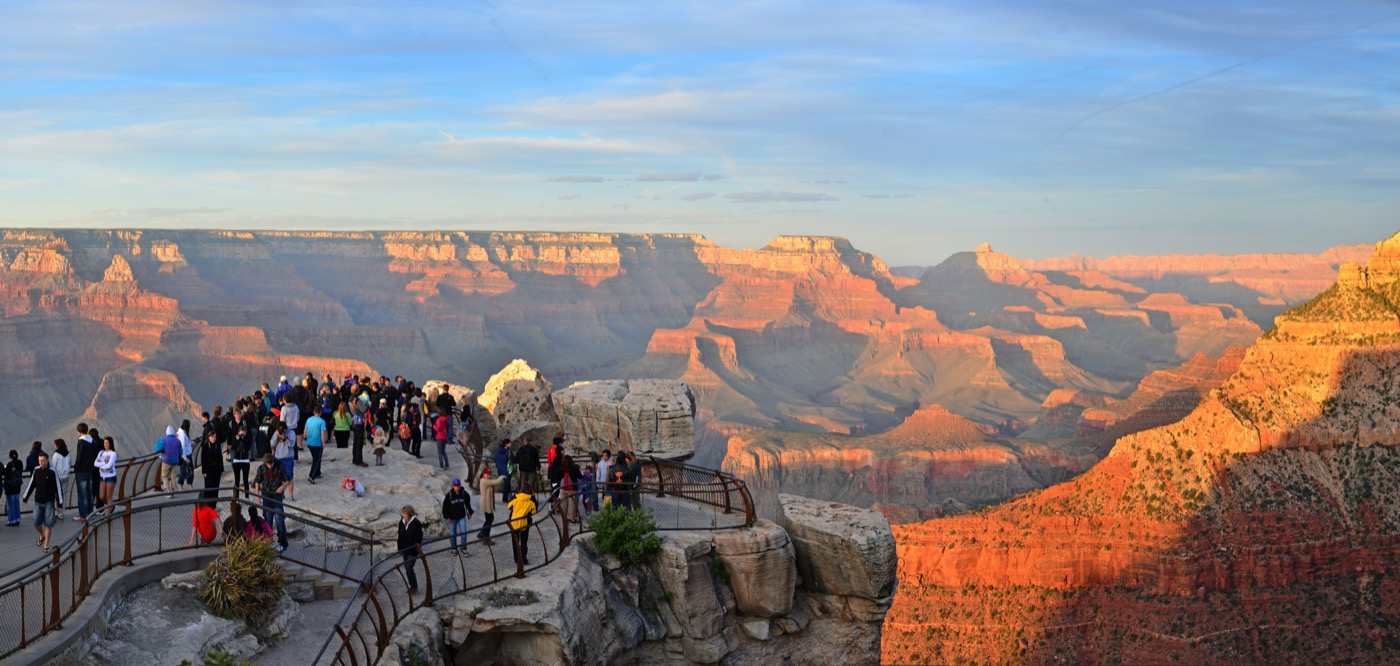
Here's the good news: the Grand Canyon is one of the few famous parks where doing almost no walking still leaves you slack-jawed. It's a mile-deep, up to 18-mile-wide canyon carved along 278 miles of the Colorado River, and the best views are a few steps from a parking lot or shuttle stop. You do not need to descend into it to feel like you've seen it.
The viewpoints that do the heavy lifting
The South Rim is the developed side, open all year, and it's set up for exactly this. Almost everyone starts at the Grand Canyon Visitor Center, where Mather Point is a short paved walk from the plaza. That railing-lined outcrop is where the canyon hits you for the first time. From there you can string together overlooks without ever leaving pavement.
- Mather Point: the classic first view, steps from the visitor center.
- Yavapai Point: sits on the rim between Market Plaza and the visitor center, with the Yavapai Geology Museum perched right on the edge. A paved path leads up from the parking lot.
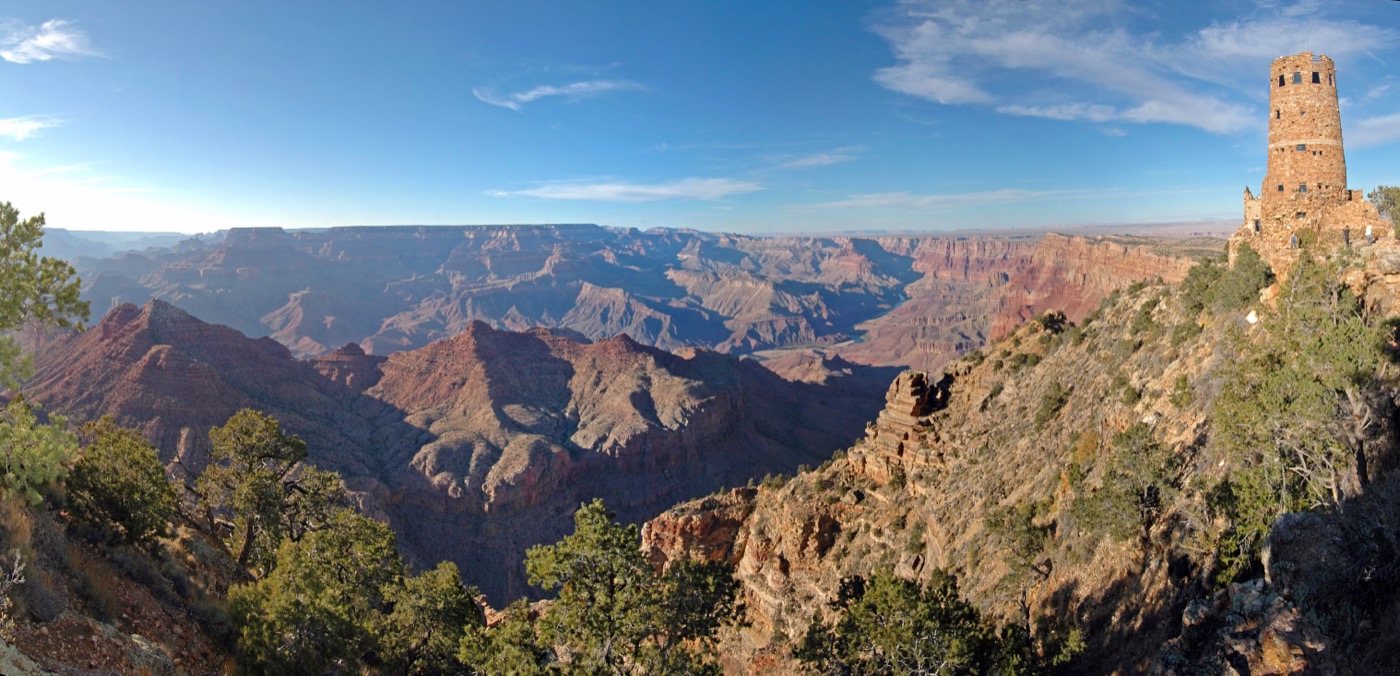
- Desert View Watchtower: the 70-foot stone tower at the park's eastern edge, 25 miles east of the village. It's the most dramatic "first view" if you enter from the East Entrance near Cameron.
Let the shuttle and your car do the walking
Two things make this park genuinely easy on the legs: a free shuttle system and a paved rim drive.
The Hermit Road stretch west of the village is closed to private cars most of the year, but the shuttle runs its length and stops at a string of overlooks. You hop off, look, and hop back on. The Desert View Drive east of the village is open to cars and chains together pullout after pullout for 25 miles to the Watchtower. The Kaibab Rim (Orange) Route shuttle connects the visitor center to Yavapai Point and the geology museum, and the buses have ramps and wheelchair space (chairs up to 30 by 48 inches fit). Between shuttle stops, the paved Rim Trail lets you walk as little or as much as you want along the edge.
Indoor and sit-down stops when you need a break
The canyon is relentless on the eyes, so build in stops that aren't a viewpoint:
- Park films at the Visitor Center theater: free, with open captioning. "We Are Grand Canyon" (the heritage of the 11 Tribal communities connected to the canyon) shows on the hour; "Grand Canyon: A Journey of Wonder" shows on the half-hour. About 24 minutes each.
- Geology Talk at Yavapai Point: a free, 30-minute ranger program at 3:00 pm daily (through May 22, 2026), meeting in front of the Yavapai Geology Museum. It's the fastest way to make the rock layers make sense, and the meeting spot is wheelchair accessible.
- Kolb Studio: a five-story house-turned-museum perched on the rim in Historic Grand Canyon Village, with the Amazing Kolb Brothers exhibit (antique cameras and their 1912 Colorado River film). The upper bookstore is accessible; 17 steps drop to the exhibit hall, so ask staff if you need the wheelchair route. A 10-minute look or a 45-minute deep dive, your call.
Logistics, heat, and a note for families
Entry is $35 per private vehicle, valid seven days. The South Entrance near Tusayan is the busiest. Expect lines and waits up to two hours between roughly 9:30 am and 4 pm. The East Entrance at Desert View usually moves faster, and both are open 24/7. Heads up: the entrances take credit cards and America the Beautiful passes but no cash.
The rim sits around 7,000 feet, so summer afternoons can bring sudden thunderstorms and the air is thinner than most visitors expect. Take it slow and drink more water than feels necessary. Temperatures inside the canyon run 20 to 30 degrees hotter than the rim, which is one more reason a non-hiker's day up top is the smart play in summer.
With kids, the rim-and-shuttle approach is forgiving. Short hops between viewpoints, a 24-minute film when attention runs out, and the Junior Ranger program give you natural pacing. Keep little ones close at overlooks (many have low or no railings) and you've got a full, genuinely jaw-dropping day without a single switchback.
Planning the real thing? Nestward builds a day-by-day plan for this park in minutes, free, no subscription. See how it works →