 Nestward
One Day in Death Valley
A focused route through the park's greatest hits, built around the heat.
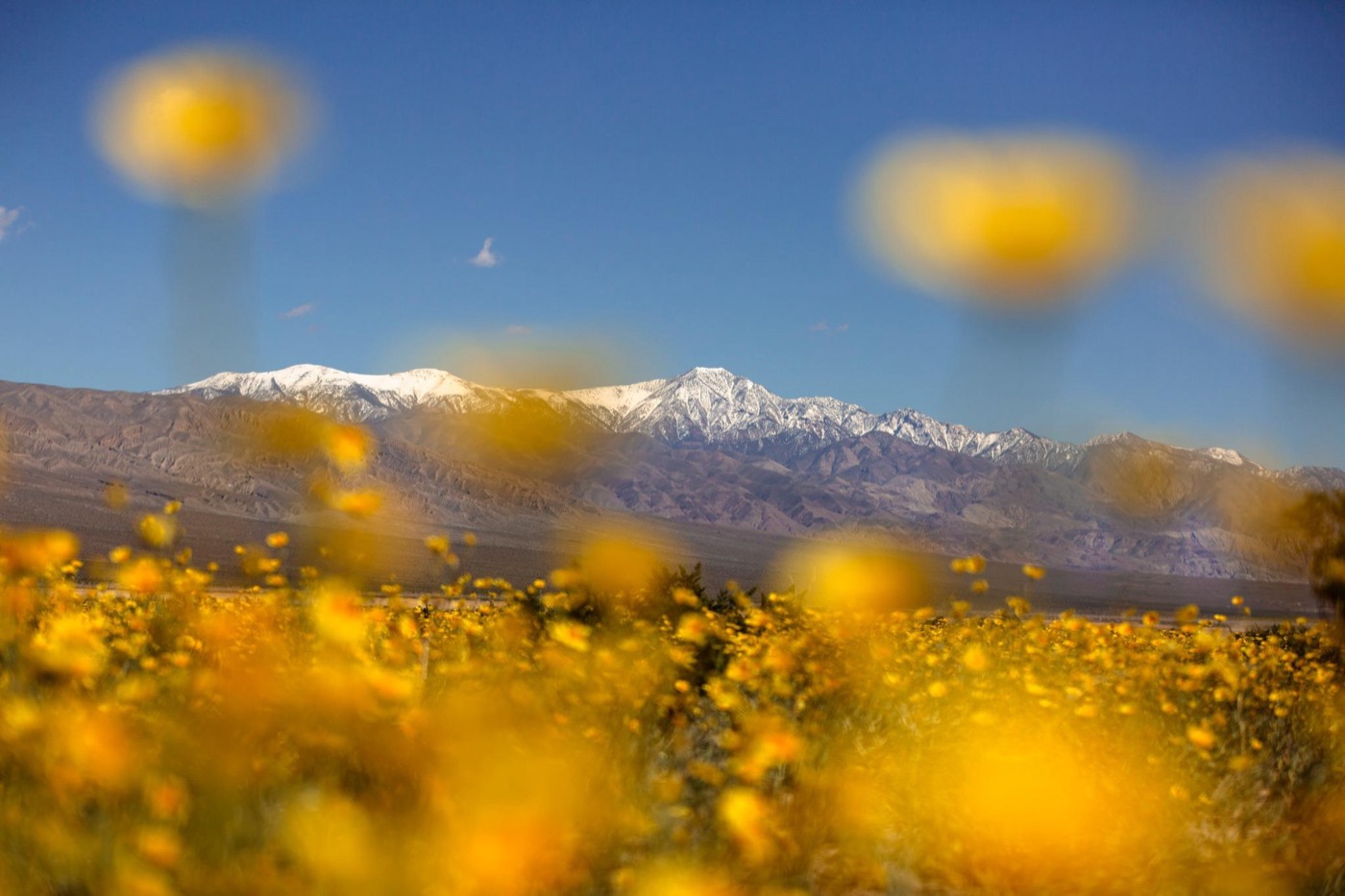
Death Valley is a land of extremes: the lowest, driest, hottest place in North America, where a below-sea-level basin sits in the shadow of snow-frosted peaks. One day isn't enough to see it all, but it's plenty to hit the icons if you start early and plan around the heat. Here's a route that works.
Start before sunrise at Zabriskie Point
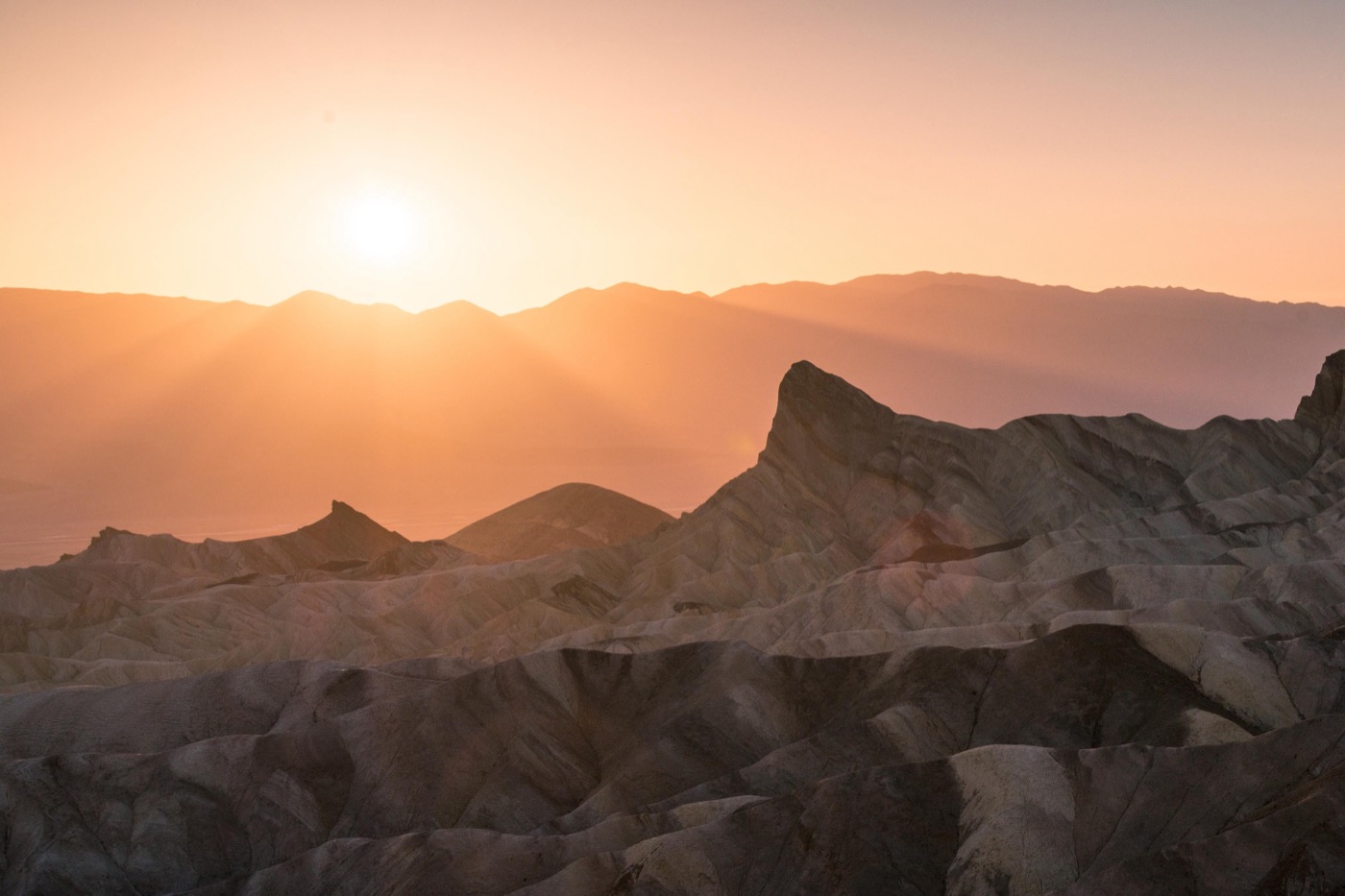
If you do one thing right in Death Valley, make it this: get to Zabriskie Point for sunrise. The early light turns the eroded, wrinkled badlands gold and pink, and the parking lot is a two-minute walk from the overlook. No hiking required. In summer it's also the only comfortable part of the day, so this isn't just for the view. It's strategy.
From there, drive the short loop through Twenty Mule Team Canyon, a one-way unpaved road (fine for normal cars) that winds through the same colorful badlands up close. It's quiet, weird, and usually empty in the morning.
Drop to the lowest point: Badwater Basin
Head down to Badwater Basin, the lowest point in North America at 282 feet below sea level. A boardwalk leads out onto a vast white salt flat. Walk a few hundred yards past the crowds and you'll find the honeycomb salt polygons most people photograph. There's no shade and no water out here, so go in the morning and bring more water than you think you need.
- Look up at the cliff face behind the parking lot for the small "Sea Level" sign. It puts the depth in perspective.
- The salt is sharp and uneven; closed-toe shoes beat flip-flops.
Work your way back: Artists Drive and Devils Golf Course
On the return north, take Artists Drive, a one-way paved loop off the main road. The highlight is Artists Palette, a hillside streaked with pink, green, and purple mineral color, best in afternoon light. The road has tight dips and curves that kids tend to love. Just before it, the Devils Golf Course is a short detour onto a field of jagged rock-salt spires: a quick stop, but unlike anything else.
End the day high: Dantes View
Close with the long climb up to Dantes View, a mile above the valley floor. From here you look straight down onto Badwater's salt flats with the Panamint Range rising on the far side, the best big-picture view in the park, and noticeably cooler thanks to the elevation. It's a worthy sunset spot if you'd rather end high than head back to Zabriskie.
Practical notes
- When to go: Spring is the most popular season, with warm days and possible wildflowers. Avoid midday in summer, when valley-floor temperatures regularly top 120°F. Late fall and winter are excellent and underrated.
- Getting in: The park is open 24/7, year-round. Entrance is $30 per vehicle, good for seven days. Pay at machines or the Furnace Creek Visitor Center, which is the place to fill water, use real restrooms, and check road conditions.
- Fuel and water: Gas is limited and pricey inside the park; top off before you arrive. Cell service is spotty to nonexistent, so download maps ahead of time.
- Dogs: Like most national parks, Death Valley keeps pets on a tight leash, literally. Dogs are allowed on paved roads, in parking areas, and in campgrounds, but not on any hiking trails or the salt flats. With no shade and brutal heat, this is genuinely not a dog-friendly day trip; leave them home if you can.
- With kids: The big draws here are drive-up and short-walk, which suits a family day. Pace it with the heat: Zabriskie and Badwater in the cool morning, air-conditioned car time through the midday, Artists Drive and Dantes View as the day softens.
Planning the real thing? Nestward builds a day-by-day plan for this park in minutes: free, no subscription. See how it works →