 Nestward
Great Sand Dunes With Kids: Sledding, Creek Days, and How to Time It Right
A family-first guide to the tallest dunes in North America
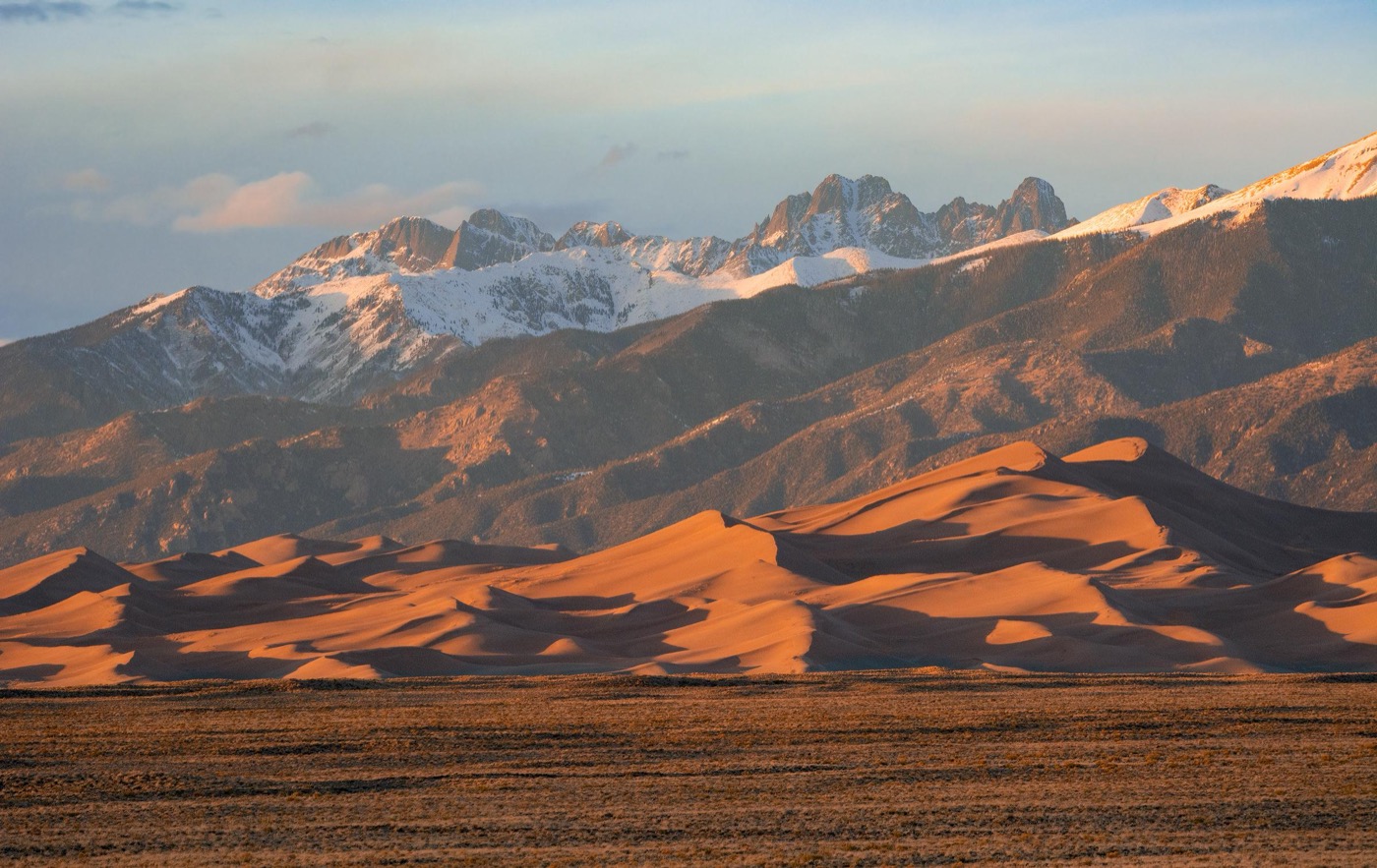
Great Sand Dunes is one of the best national parks for younger kids, a giant sandbox at the foot of the Sangre de Cristo Mountains in southern Colorado. But two things make or break a family visit here: midday sand surface temps can hit 160°F in summer, and the park sits at 8,000 feet. Get the timing right and it's magic. Get it wrong and you're carrying a sunburned, altitude-cranky kid back across the dunefield.
The two main events: sledding and Medano Creek
For families, the park really comes down to two activities, and both are right at the main Dunes Parking Lot.
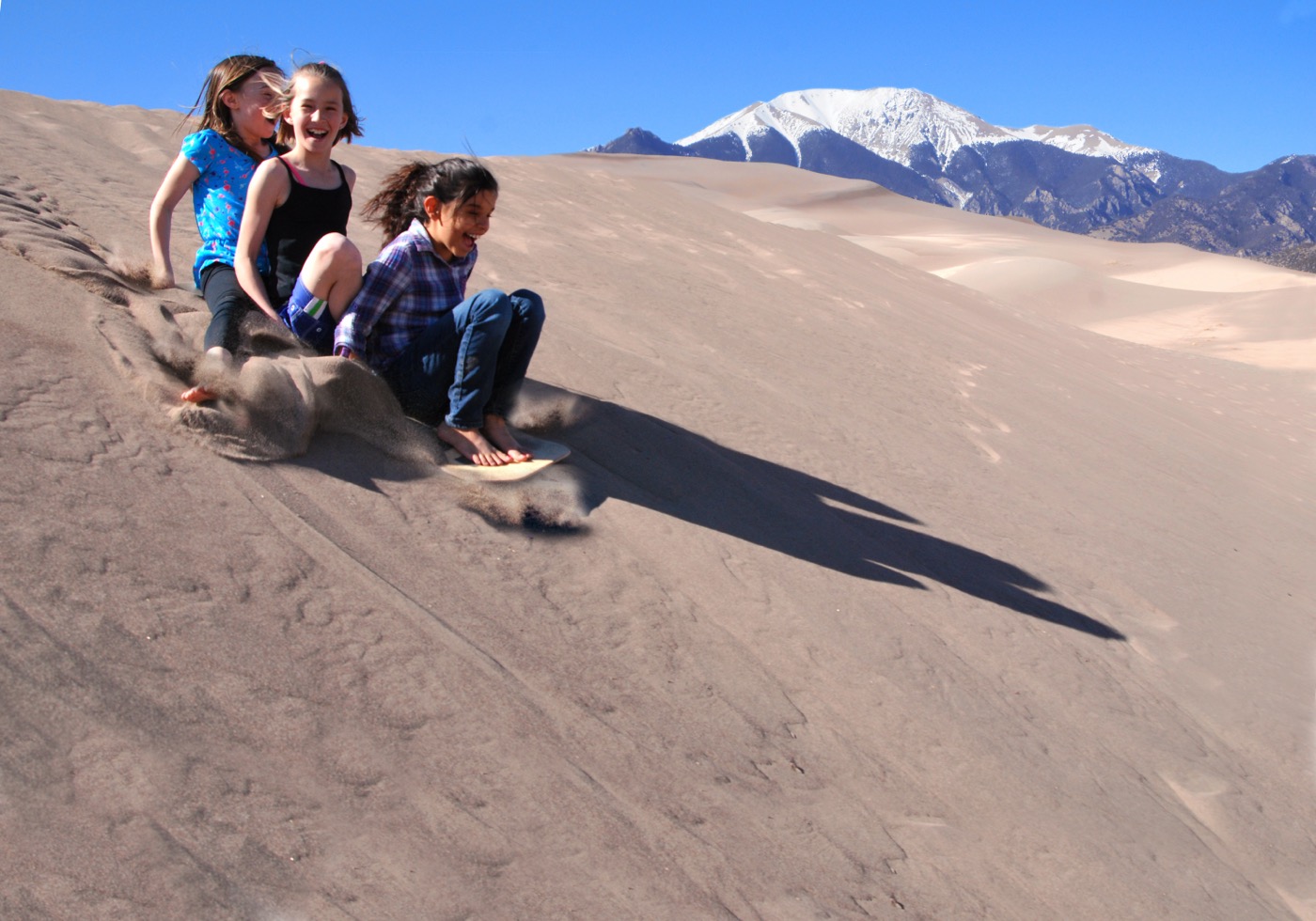
- Sandboarding and sand sledding. This is the headliner. Important: cardboard, snow saucers, and regular sleds do not slide on dry sand. You need specially designed sand sleds or boards, which you rent outside the park (in Mosca or at the campground store area), not from the NPS. Rent them on your way in.
- Splash in Medano Creek. A wide, shallow stream that flows along the base of the dunes in spring and early summer, fed by mountain snowmelt. In a good snowpack year it actually pulses in gentle "surge" waves kids can float on. It's the perfect cool-down between sledding runs, and it doubles as a built-in toddler beach.
Plan to do both in the same visit. Sled first while energy is high, then let everyone wade and cool off in the creek.
When to go (this is the whole game)
Medano Creek peaks in late May through mid-June in most years, and that window gives you flowing water and sleddable dunes. By July the creek is usually a trickle or gone. That late-spring sweet spot is the best time for a family trip.
Whenever you visit in summer, go early morning or evening. The park's own guidance is blunt about it: explore the dunes in the morning or evening because midday sand temps are dangerous. A realistic family day looks like:
- Hit the dunes parking lot by 8–9 a.m. while the sand is still cool.
- Retreat to shade, the visitor center, or the creek by late morning.
- Come back out around 5–6 p.m. for round two and a cooler walk.
One upside of that schedule: this is an International Dark Sky Park, and it's open 24/7 with no timed entry or reservations. If your kids can stay up, stick around after dark for the stars.
Gentler trails when you want off the sand
You don't hike the dunes on a trail. You just walk out onto them as far as your group can manage (the high dune is a serious climb in loose sand, so don't promise the kids you'll reach the top). For actual shaded trails, two near the visitor center work well for families:
- Montville Nature Trail: a short loop, the easiest real "hike" here and a good leg-stretcher with little ones.
- Mosca Pass Trail: follows a creek up into the forest; turn around whenever the kids are done. You don't have to finish it.
The serious stuff (Sand Creek Lakes, Medano Lake and Mount Herard, the Medano Pass 4WD road, the alpine backcountry of the preserve) is real, but it's for older kids and capable hikers, not a stroller crowd.
Practical logistics for parents
- Cost & entry: $25 per private vehicle, valid 7 days. No reservations or timed entry. Just drive in. Fees are only collected when the entrance station is staffed.
- Getting there: The park is near Mosca, CO. Take US 160 to CO 150 from the south; the park is at the north end of CO 150. It's remote, so fuel up and stock the cooler before you arrive.
- Altitude: 8,000 feet at the dunes, higher on the trails. Kids feel it. Push water hard, don't over-schedule day one, and expect everyone to tire faster than at home.
- Sun & heat: High-altitude sun is intense. Hats, real sunscreen, and closed-toe shoes or sandals. Barefoot on midday sand is a genuine burn risk.
- What to pack: A change of clothes (sand and creek water get everywhere), extra water, and a small towel per kid. The sand gets into the car no matter what you do. Accept it.
- Junior Ranger: Grab a booklet at the visitor center. It earns a badge and keeps older kids engaged between sledding runs.
Planning the real thing? Nestward builds a day-by-day plan for this park in minutes, free with no subscription. See how it works →