 Nestward
Yellowstone With Kids
A family guide to the geysers, the wildlife, and the long drives in between.
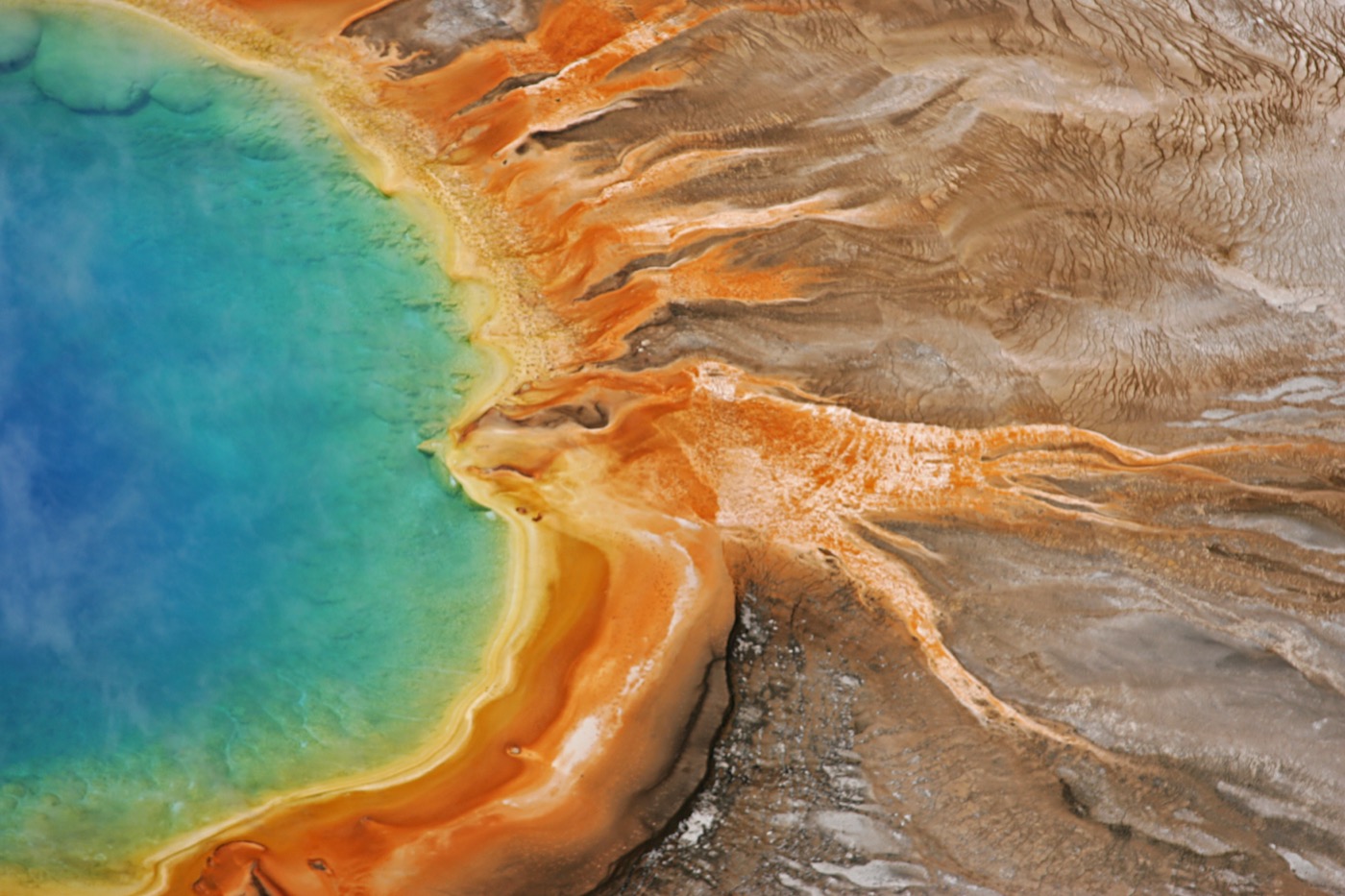
Yellowstone became the first national park in 1872, and it still delivers the goods: geysers, hot springs, bison in the road. The catch for families is the scale. It's nearly 3,500 square miles across Wyoming, Montana, and Idaho, and the drives between highlights are long. Plan around that and kids love it. Ignore it and everyone melts down by 2 p.m.
What actually wows the kids
You don't need big hikes here. Most of Yellowstone's best moments are along the road or a short flat boardwalk, which is ideal for short legs.
- Old Faithful: predictable eruptions roughly every 90 minutes, with posted next-eruption times at the visitor center. Easy to time around a snack.
- Grand Prismatic Spring: the rainbow hot spring on the cover photo. The boardwalk loop is flat and stroller-passable. For the famous overhead view, the Grand Prismatic Overlook Trail off the Fairy Falls trailhead is a short but real uphill, fine for kids who can handle half a mile of climbing.
- Mud Volcano Boardwalk: bubbling, burping, sulfur-smelling mud pots. Gross noises and bad smells; in other words, a hit.
- West Thumb Geyser Basin: thermal features right at the edge of Yellowstone Lake. Short, scenic, low effort.
- Grand Canyon of the Yellowstone: Artist Point gives you the Lower Falls view from a railed overlook with almost no walking.
If your kids want one actual hike, the Fairy Falls Trail is mostly flat to a tall waterfall, and Cascade Lake is a gentle, meadow-heavy walk good for wildlife spotting. Save Mount Washburn (via Dunraven Pass or Chittenden Road) for older, fit kids. It's a real climb with real altitude.
Wildlife: the best part, and the safety talk
Bison, elk, and sometimes bears and wolves are genuinely the highlight for most kids. They're also the part where you need rules. The park requires staying 25 yards from bison and elk and 100 yards from bears and wolves, and bison injure more visitors here than any other animal, almost always because someone got too close for a photo.
- Make the distance rule a game: "Can you cover the animal with your thumb at arm's length? Then you're far enough."
- The Lamar and Hayden valleys are the best wildlife viewing, especially early morning and near dusk. Bring binoculars; let the kids be the spotters.
- Never let kids run ahead on trails or get between an animal and the road. Bison look slow and are not.
Pacing it so nobody melts down
Yellowstone has five entrances spread hours apart, and the main road is a figure-eight loop. The mistake families make is trying to "see it all" in a day. Don't.
- Pick a region per day. Old Faithful and the geyser basins one day; the canyon and a valley the next. Driving the whole loop in a day means a lot of car and not much park.
- Start early. Parking at Old Faithful and Grand Prismatic fills by mid-morning in summer, and early light is when animals are out.
- Build in boredom breaks. Picnic areas are everywhere. A sandwich and a creek beats one more thermal feature when kids are done.
- Free Junior Ranger program. Pick up an activity booklet at any visitor center; kids earn a badge and it gives the day a mission.
Practical logistics
- Cost & timing: $35 per private vehicle, good for seven days. No timed-entry reservation as of now, but lodging and campgrounds book out months ahead, so reserve early.
- Best time for families: June through early September has the most open roads and services. Snow can fall any month, so pack a warm layer and rain gear even in July. Summer highs top 70°F and can drop 20 degrees when a storm rolls in.
- Getting in: The North Entrance (Gardiner, MT) is the only one open to cars year-round. Most others open mid-April to mid-May and close in early November. Always check road status before you drive, since entrances can be hours apart.
- Dogs: If you're tempted to bring the family dog, know that pets are banned from all trails, boardwalks, and the backcountry. They're allowed only in developed areas, parking lots, and within 100 feet of roads, meaning a thermal-feature trip is essentially no place for a dog.
- Safety: Stay on boardwalks at all times. The ground around thermal features is thin crust over scalding water, and most thermal injuries here happen to people (and pets) who stepped off the path.
Planning the real thing? Nestward builds a day-by-day plan for this park in minutes, free, no subscription. See how it works →