 Nestward
3 Days in Yellowstone With Kids
A geyser-and-wildlife itinerary paced for short legs and shorter attention spans
Yellowstone is enormous (nearly 3,500 square miles across Wyoming, Montana, and Idaho), and the driving between sights is the part that surprises families. Three days is enough to hit the headliners if you accept that you won't see everything. This plan keeps walks short, builds in wildlife time, and assumes at least one meltdown per day.
Before you go: the logistics that matter
Yellowstone became the first national park in 1872, and the crowds prove it. A private-vehicle entrance pass is $35 and covers seven days. The park has five entrances, and they don't all open at the same time. The North Entrance at Gardiner, Montana is the only one open to cars year-round; the West, East, and South entrances generally run late April or May through early November, weather depending.
A few practical notes for families:
- Distances are long. It can take hours to drive between entrances. Pick lodging that minimizes backtracking: West Yellowstone for geysers, or Canyon for the waterfalls.
- Weather swings hard. Summer highs can top 70°F, then drop 20 degrees when a storm rolls in. It can snow in any month. Pack a warm layer and rain gear even in July.
- Most of the park sits above 7,500 feet. Kids tire faster at altitude and sunburn quicker. Go easy the first day.
- Wildlife is genuinely wild. Bison and elk wander the roads and cause "bison jams." Stay 25 yards from them and 100 from bears. This is the rule that keeps the trip from going sideways.
Day 1: Geysers and the boardwalk wow factor
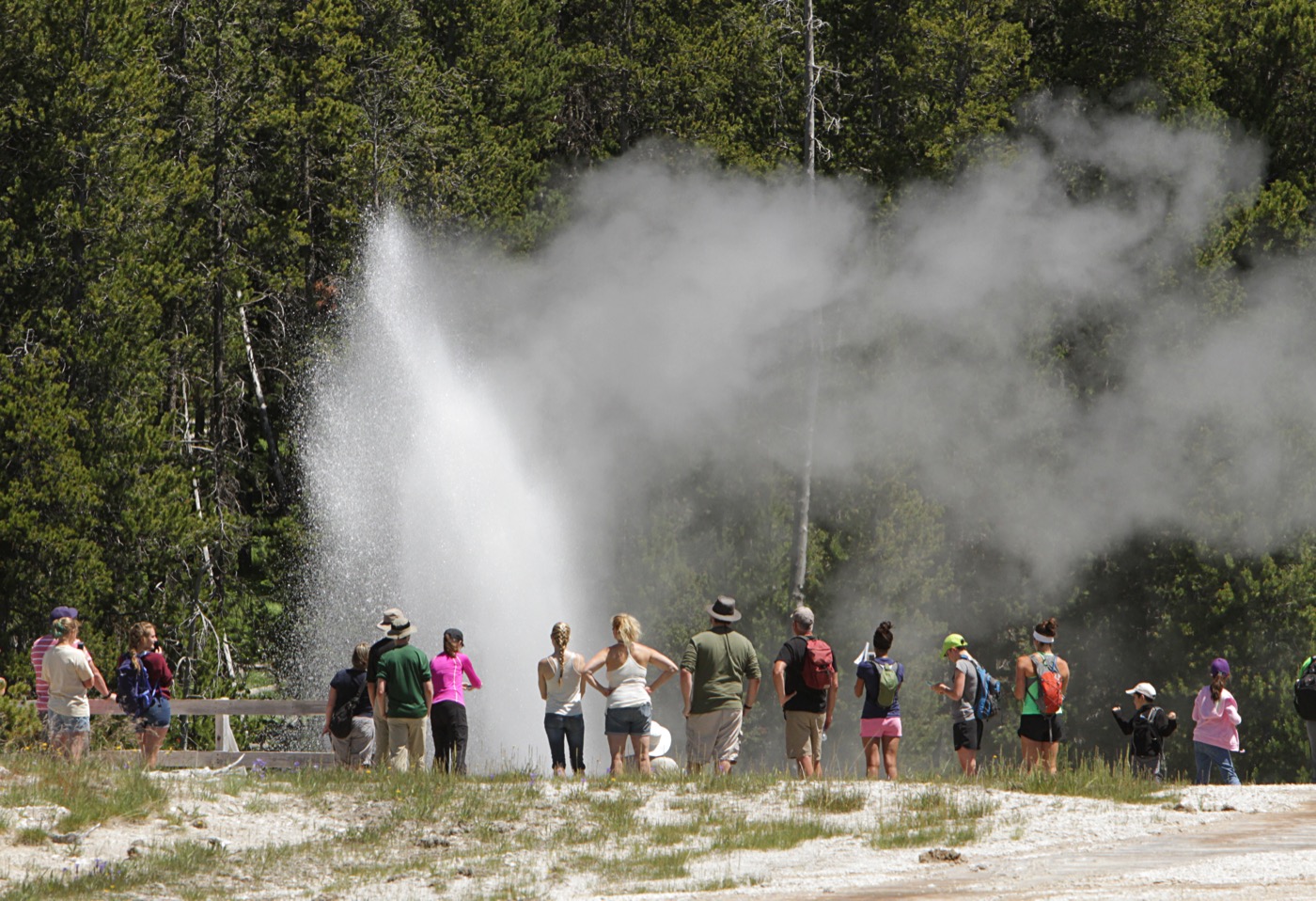
Start with the part kids picture when they hear "Yellowstone": Old Faithful. Eruptions are predicted, so check the posted time at the visitor center and plan around it. While you wait, walk the Upper Geyser Basin boardwalks, flat, stroller-friendly, and packed with steaming pools and smaller geysers like Beehive and Aurum.
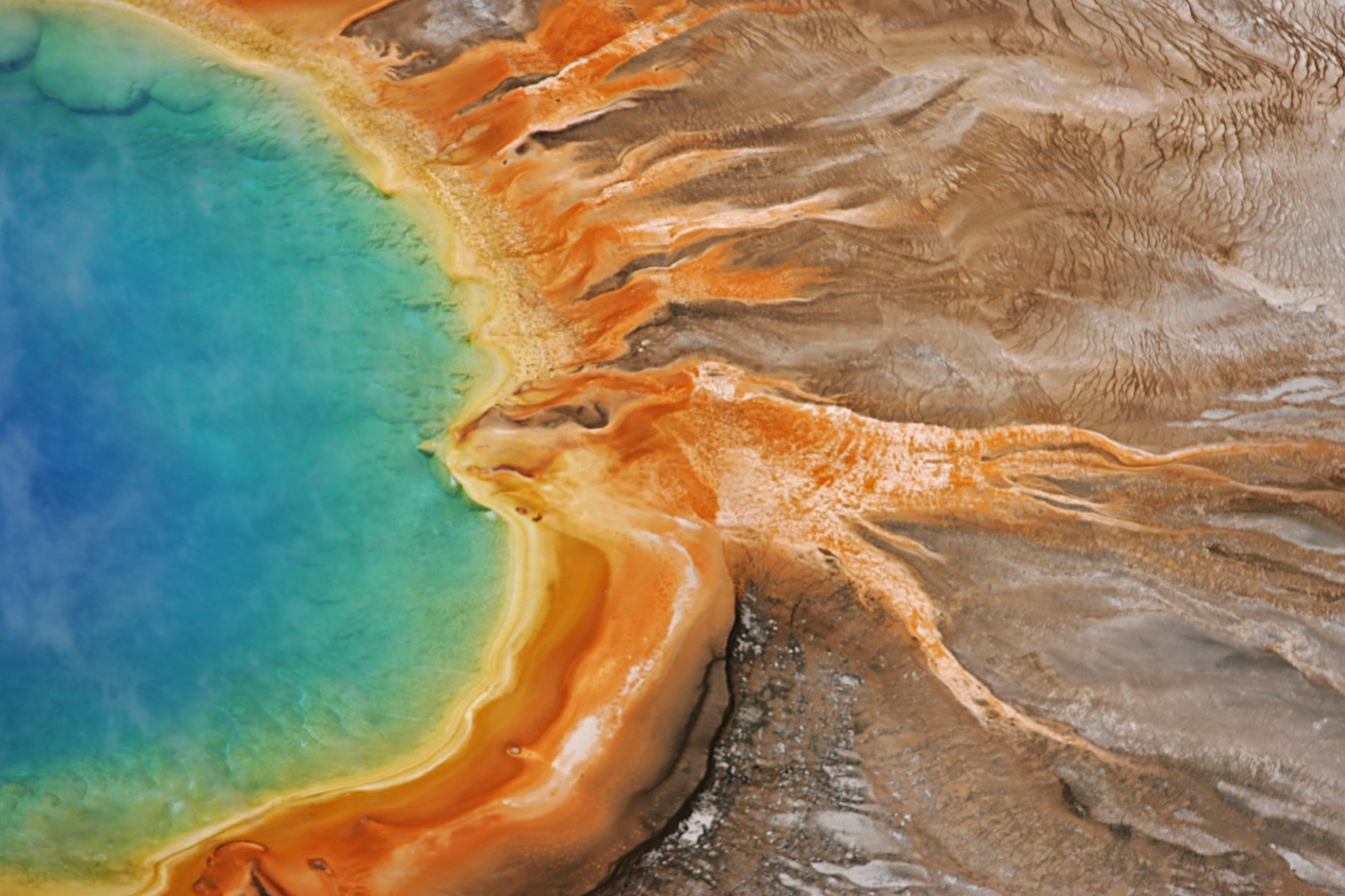
Then drive a short way to Grand Prismatic Spring, the rainbow-ringed pool in every Yellowstone photo. The boardwalk gets you right beside it. For the famous overhead view, the Grand Prismatic Overlook Trail branches off the Fairy Falls Trail, a gentle 1.2-mile round trip to the viewpoint and very doable for most school-age kids. If little legs are done, skip it; the boardwalk alone is worth the stop.
Cap the day at the West Thumb Geyser Basin, where hot springs like Black Pool sit right at the edge of Yellowstone Lake. Short loop, big payoff, easy win to end on.
Day 2: The canyon, waterfalls, and a wildlife valley
Head to the Grand Canyon of the Yellowstone. The view of Lower Falls from Artist Point is the money shot: a 308-foot waterfall plunging into a yellow-walled canyon, reachable by a short paved walk from the parking lot. That accessibility makes it the easiest big-drama moment in the park for families.
If your crew has energy and you want a real hike, the Cascade Lake Trail near Canyon is a mellow walk through meadows where you might spot elk, flatter and less crowded than the canyon rim. Save Mount Washburn (the Dunraven Pass – Mount Washburn Trail or Chittenden Road – Mount Washburn Trail) for families with older, hike-tested kids; it's a real climb with real views, not a stroller walk.
For wildlife, aim for early morning or the hour before dusk and drive slowly through Hayden Valley. Bison herds, sometimes a distant bear, often elk. Bring binoculars and snacks. Patience is the whole activity, and that's fine.
Day 3: Terraces, bubbling mud, and a slower pace
Day three is for the things that are weird in a way kids love. Mammoth Hot Springs in the north has terraced travertine formations that look like a melted wedding cake; boardwalks let you wander among them at your own speed, and elk frequently lounge on the lawns nearby.
On the way back, stop at the Mud Volcano Trail, a short boardwalk loop past burping mud pots and the hissing Dragon's Mouth Spring. It smells like rotten eggs, which is exactly why it's a hit. Keep a hand on younger kids near the rails; the ground here is hot and fragile, and stepping off-trail is both dangerous and illegal.
Round out the trip with the free Junior Ranger program. Kids pick up an activity booklet at any visitor center, complete a few tasks during the day, and earn a badge. It turns the long drives into a scavenger hunt and is the single best meltdown-prevention tool in the park.
How to pace it so nobody breaks
- One big walk per day, max. The rest should be boardwalks and overlooks.
- Pack a real lunch. Food options inside the park are limited and lines are long. Picnic areas are everywhere.
- Build in car time as wildlife time. The drives are long; treat them as the safari, not the commute between attractions.
- Start early. Parking at Old Faithful and the canyon fills by mid-morning in summer.
Planning the real thing? Nestward builds a day-by-day plan for this park in minutes, free with no subscription. See how it works →