 Nestward
Yellowstone for Non-Hikers
The geysers, canyons, and wildlife, without a big hike to get there.
Here's the good news: Yellowstone is built for people who don't want to hike. The headline attractions (geysers, hot springs, a 300-foot waterfall, herds of bison) sit right along the roads or at the end of flat boardwalks. You can see the best of the park's nearly 3,500 square miles from a car seat and a few short walks. The catch is the driving: distances between sights are long, so the planning matters more than the legwork.
The geyser basins do the work for you
Yellowstone became the first national park in 1872 specifically for its hydrothermal wonders, and almost all of them are wheelchair-and-stroller-friendly boardwalks, not trails.
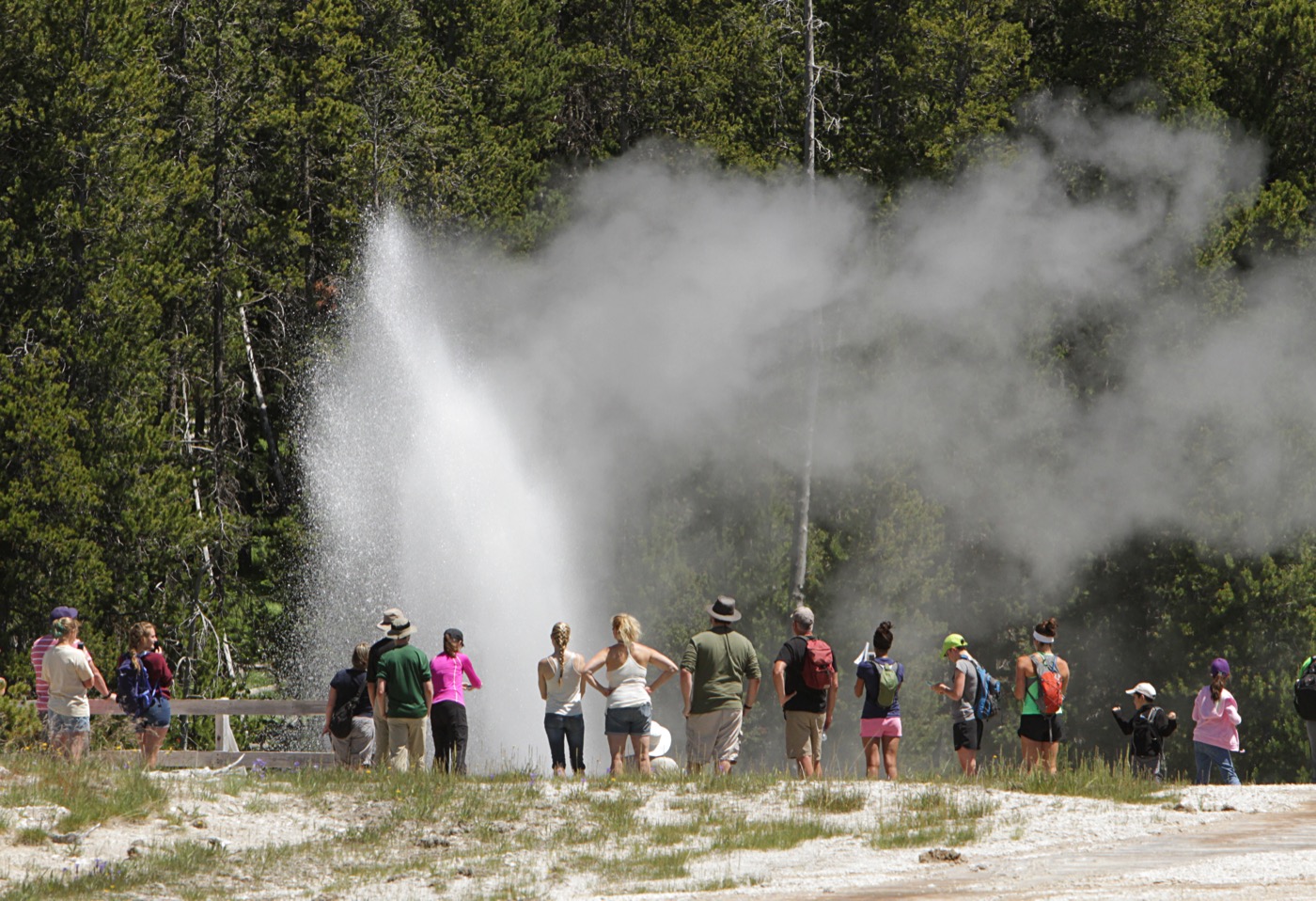
- Upper Geyser Basin (Old Faithful): Old Faithful erupts roughly every 90 minutes, and predicted times are posted at the visitor center so you can time it. The flat boardwalk loop here also passes Beehive and Aurum geysers. You can do as little or as much of it as your legs want.
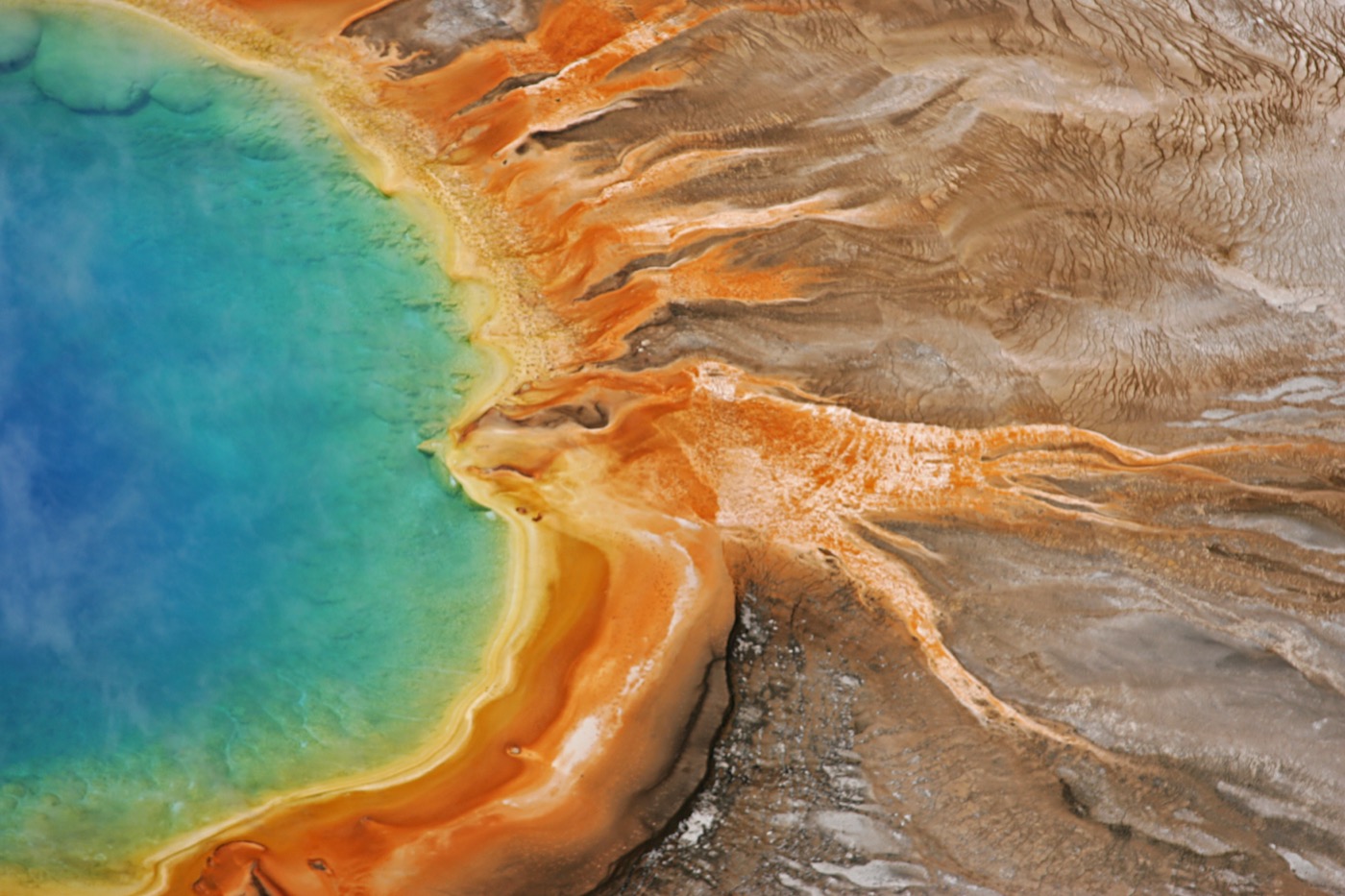
- Grand Prismatic Spring: the giant rainbow spring in every Yellowstone photo. The Midway Geyser Basin boardwalk takes you right up to its edge on the level. For the famous aerial-style view, the short Grand Prismatic Overlook Trail climbs a bit. Skip it if stairs aren't your thing; the boardwalk is plenty.
- West Thumb Geyser Basin: a compact, easy boardwalk loop of colorful pools (including Black Pool) right on the shore of Yellowstone Lake. One of the prettiest payoffs-per-step in the park.
- Mud Volcano: the short Mud Volcano Boardwalk delivers bubbling, sulfur-smelling mudpots that kids tend to love and adults tend to make faces at.
Mammoth Hot Springs and the scenic drives
The Mammoth Hot Springs terraces (Palette Spring and the chalk-white tiers around it) have both boardwalks and an upper-terrace drive, so you can see a lot without climbing. From there, the park's road system is essentially one big scenic drive.
The figure-eight Grand Loop Road connects nearly every major sight. Standouts you can pull over for: the Yellowstone River near Tower Fall, the wide-open Lamar and Hayden valleys for wildlife, and the overlooks into the Grand Canyon of the Yellowstone (more below). Build in extra time. The park warns that it takes many hours just to drive between its five entrances, and wildlife jams (bison standing in the road) are routine.
The canyon and waterfall, by car
The Grand Canyon of the Yellowstone has roadside overlooks that require almost no walking. Artist Point gives you the postcard view of the 308-foot Lower Falls from a short, paved path off the parking lot. Inspiration Point and Lookout Point along the canyon rims offer similar drive-up drama. If you only do one short walk in the whole park, make it the few hundred feet to Artist Point.
Best timing, entrances, and what to know
- When to go: Most roads and all five entrances are open for wheeled vehicles roughly late April through early November (exact dates are weather-dependent). The North Entrance at Gardiner, Montana is the only one open to cars year-round.
- Fees: $35 per private vehicle, good for seven days. An $80 America the Beautiful pass pays off fast if you're visiting other parks.
- Weather: It can snow any month of the year, and summer afternoons can drop 20 degrees when a storm rolls through. Bring a warm layer and rain gear even in July.
- Pace it: Because the sights are spread out, two or three short stops a day plus driving is a full, satisfying day. Don't try to circle the whole loop in one go.
A quick word on dogs
If you're hoping to bring the dog: Yellowstone is one of the strictest parks for pets. Dogs are not allowed on any trails, boardwalks, or in the thermal areas, and the thermal areas are most of what makes the park worth seeing. Pets are limited to within 100 feet of roads, parking lots, and campgrounds, and must be leashed. Realistically, that means a lot of waiting in the car. For a geyser-and-boardwalk trip, leaving the dog at home (or at a kennel in a gateway town) is the right call.
Planning the real thing? Nestward builds a day-by-day plan for this park in minutes, free, no subscription. See how it works →