 Nestward
Where to Stay Near Mount Rainier
A friendly look at gateway towns, in-park lodges, and campgrounds.
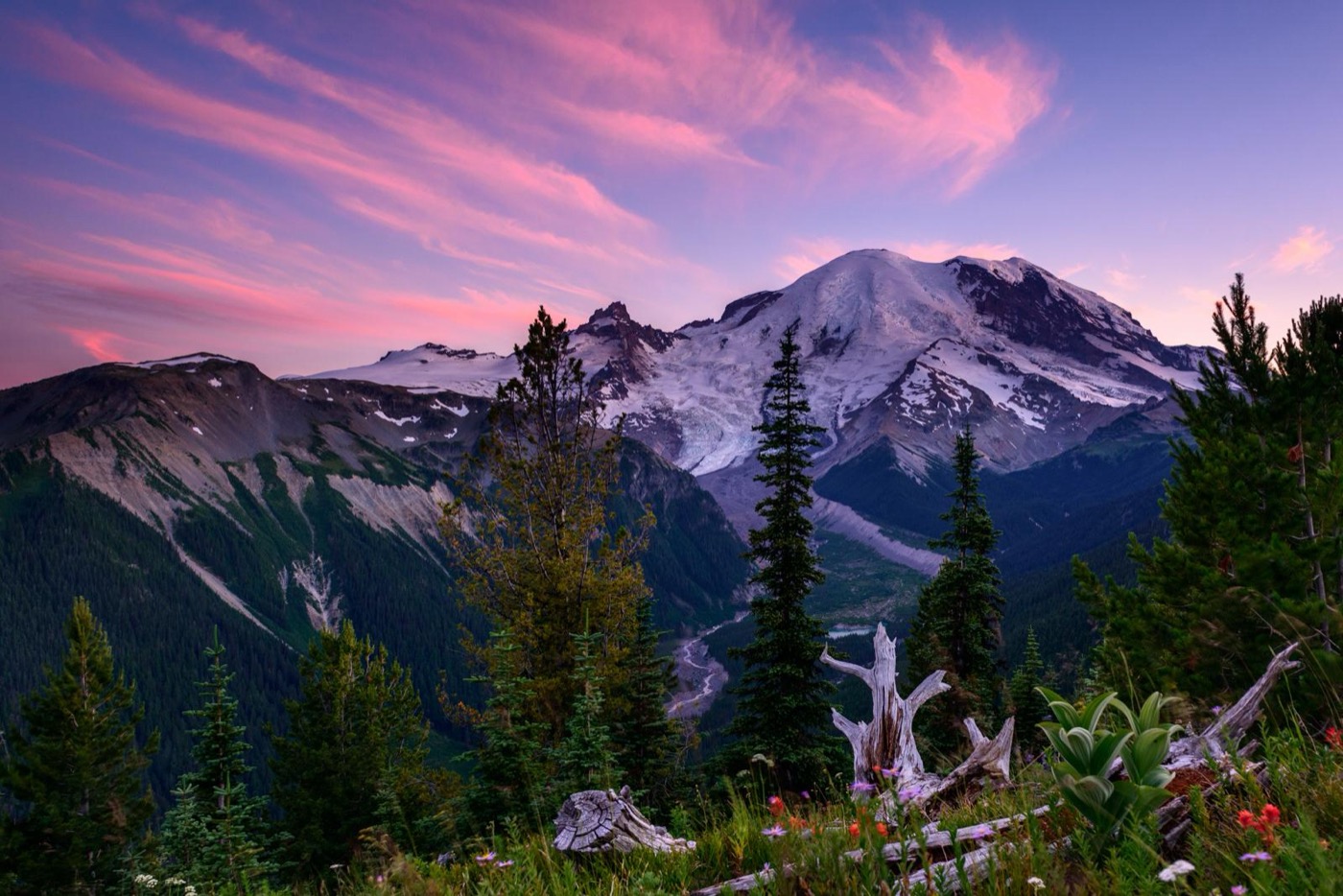
Mount Rainier is a big park with two main hubs (Paradise on the southwest side and Sunrise on the northeast), and they're nowhere near each other by road. Where you sleep mostly decides which half of the mountain you'll actually see. There's no town inside the park and no single "Rainier town" just outside it, so picking a base is the most important planning decision you'll make.
Start by picking a side: Paradise or Sunrise
The park's two showpieces are on opposite corners. Paradise, reached through the year-round Nisqually Entrance, has the famous subalpine wildflower meadows, Glacier Vista, and the most facilities. Sunrise, the highest point you can drive to, opens only late June to mid-October and reaches it through the White River Entrance on the northeast. Driving between the two takes a couple of hours each way on slow mountain roads, so most families pick one side and stay close to it rather than trying to bounce between them.
Quick note on access: the Carbon River corner is closed to vehicles in 2026 due to a bridge closure, and the high passes (Stevens Canyon, Chinook, Cayuse) close with the snow. If you're visiting outside July–September, double-check what's open before you book.
Gateway towns: where most families end up
- Ashford, the closest base to the Nisqually Entrance and Paradise. Cabins, lodges, and a few cafes line SR 706. Pros: minutes from the gate, so you beat the day-trip crowds to Paradise. Cons: it's tiny, so don't expect grocery selection or much nightlife, and prices climb in summer.
- Packwood, southeast of the park off Hwy 12, is the handiest base for the Ohanapecosh area and the SR 123 entrance. Pros: more lodging and a real grocery store, plus an easy launch point for Silver Falls and the Grove of the Patriarchs area. Cons: it's a longer drive up to Paradise than Ashford.
- Enumclaw is your gateway to the northeast and Sunrise via the White River Entrance. Pros: a full-sized town with chain hotels, restaurants, and supplies, plus it's the most sensible base if Sunrise is your priority. Cons: it's a 45-minute-plus drive up SR 410 to the entrance, and Sunrise itself is seasonal.
- Seattle or Tacoma are both within roughly two hours. Pros: every hotel and amenity you could want. Cons: that's two-plus hours each way burned on a day trip, which makes for a brutally long day with kids. Fine for a single visit, frustrating as a real base.
In-park lodges: history over convenience
The park has exactly two historic inns, both run by the concessioner, and they book out months ahead for summer weekends.
- Paradise Inn, a 1917 lodge perched right in the Paradise meadows. Pros: you wake up steps from the wildflowers, you watch the mountain change color at sunset after the day-trippers leave, and the great hall is genuinely beautiful. Cons: it's seasonal (roughly late spring to early fall), rooms are historic and snug, many have shared or down-the-hall bathrooms, and there's no TV, no air conditioning, and spotty cell service. That's the trade for sleeping on the mountain.
- National Park Inn at Longmire, a smaller, cozier inn near the Nisqually Entrance that stays open year-round. Pros: open in winter (when Longmire becomes a snowshoeing hub), warm dining room, easy access to the Longmire museum and short walks. Cons: it's lower on the mountain, so it's a drive up to the Paradise views, and it's also rustic with limited amenities.
Bottom line: in-park inns are about the experience, not the comfort. If your crew needs a pool, a fridge, and reliable wifi, a gateway-town rental will serve you better.
Campgrounds: the most affordable way in
Camping is the budget-friendly option and puts you inside the park before the gates get busy. The developed campgrounds are first-come or reservable depending on the season, and they fill on summer weekends, so reserve early.
- Cougar Rock, near Longmire on the Paradise side, is the most central campground for the southwest hub and an easy drive up to the meadows.
- Ohanapecosh, in the southeast corner among old-growth forest, lower and warmer, and well placed for Silver Falls and the Grove of the Patriarchs. A lovely, shady campground.
- White River, the launch pad for Sunrise on the northeast side, is open seasonally and the right choice if Sunrise and Sourdough Ridge are your goals.
A few caveats: none of these have hookups or showers, sites are forested rather than scenic-overlook, and nights get cold at elevation even in July. For families that want a roof and a hot shower nearby, base in a gateway town and treat the campgrounds as a backup.
So where should you actually stay?
If it's your first visit and you want the iconic meadows, base in Ashford or splurge a night at the Paradise Inn. If you're chasing Sunrise's high-country views, stay in Enumclaw or camp at White River. Want old-growth forest and waterfalls with fewer crowds? Packwood or Ohanapecosh. And if you're visiting in winter, Longmire's National Park Inn is the only on-mountain lodging open.
Planning the trip? Nestward builds a day-by-day plan in minutes, free, no subscription. See how it works →