 Nestward
One Day in Yellowstone
A focused, drivable plan for the park's greatest hits: geysers, canyon, and wildlife.
Yellowstone became the world's first national park on March 1, 1872, and it sprawls across nearly 3,500 square miles of Wyoming, Montana, and Idaho. One day is not enough to see it. Let's be honest up front. But one day is plenty to stand beside a steaming hot spring, watch a geyser fire off, and look down into a canyon you'll think about for years. The trick is picking a lane and not trying to drive the whole loop.
The constraint: this park is enormous
Yellowstone has five entrances, and the NPS itself warns that "it takes many hours to drive between these entrances." The full Grand Loop is roughly 140 miles of slow, two-lane, bison-jam road. So the single most important decision is which half you tackle. This itinerary covers the southwestern quarter (the geyser country plus the canyon), which is the densest concentration of must-see sights and works well from the West or South entrances.
- Best entrance for this plan: West Entrance (West Yellowstone, MT) or South Entrance. Both open to regular vehicles roughly mid-April through early November; the North Entrance at Gardiner is the only one open to cars year-round.
- Fees: $35 per private vehicle, good for seven days. An $80 America the Beautiful pass pays off fast if you're visiting other parks.
- Start early. Be at the gate by 7 to 8 a.m. Parking at Old Faithful and Grand Prismatic fills by mid-morning in summer, and an early start buys you the wildlife hours too.
Morning: Old Faithful and the Upper Geyser Basin
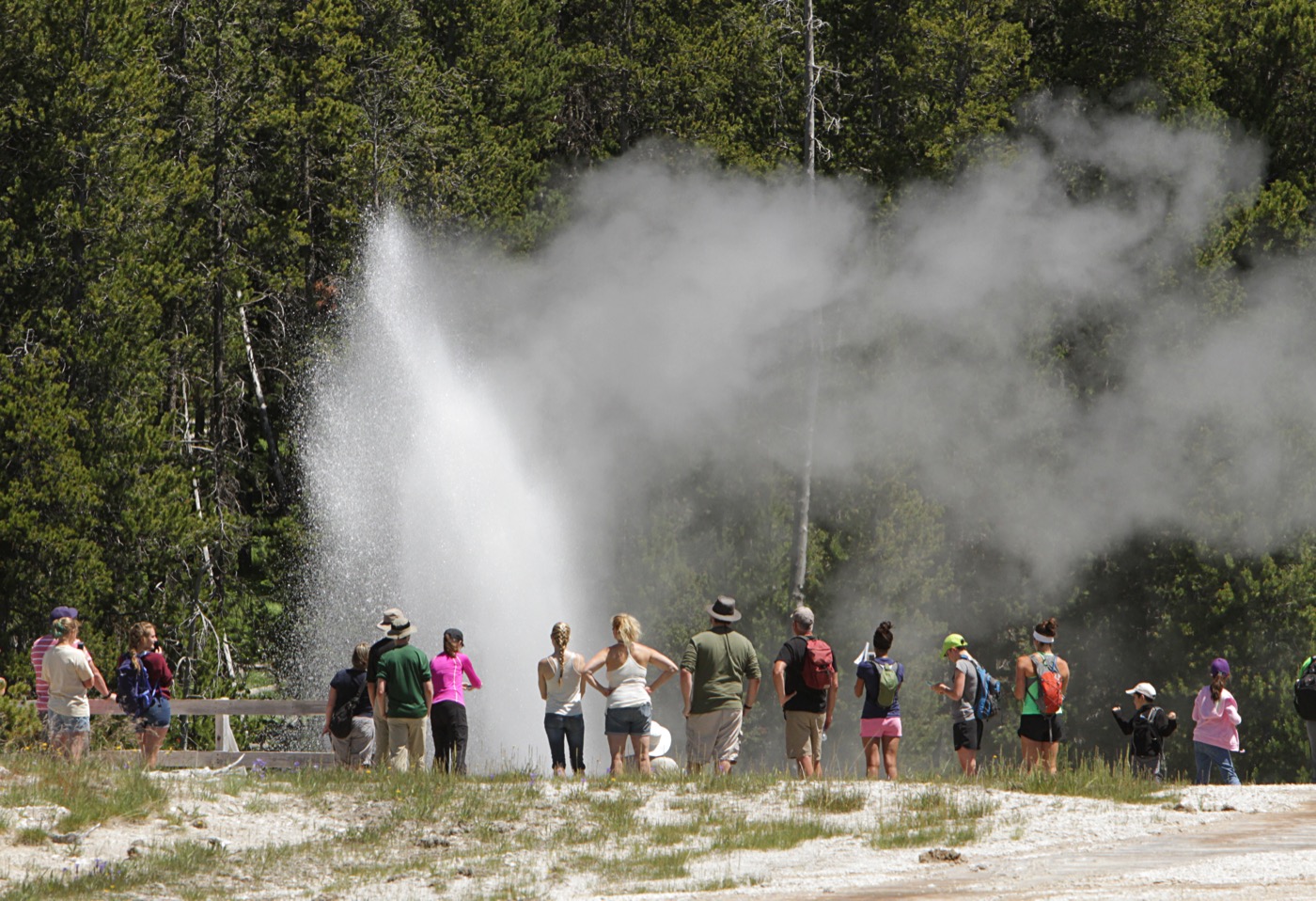
Anchor your morning at Old Faithful. Eruptions are posted at the visitor center and roughly every 90 minutes, so check the next predicted time the moment you arrive and plan around it. Don't just watch the famous one and leave. The Upper Geyser Basin holds the highest concentration of geysers on Earth, and the boardwalk loop takes you past Beehive Geyser, Aurum Geyser, and others within an easy mile or two of flat walking. It's genuinely the best stretch of pavement in the park for kids: short legs, big payoffs, and a real chance of catching an unscheduled eruption.
One firm rule everywhere in the thermal areas: stay on the boardwalk. The ground is a thin crust over boiling water, and people are seriously injured here every year. It's the kind of place where "no, we're not stepping off for a photo" is non-negotiable.
Midday: Grand Prismatic Spring
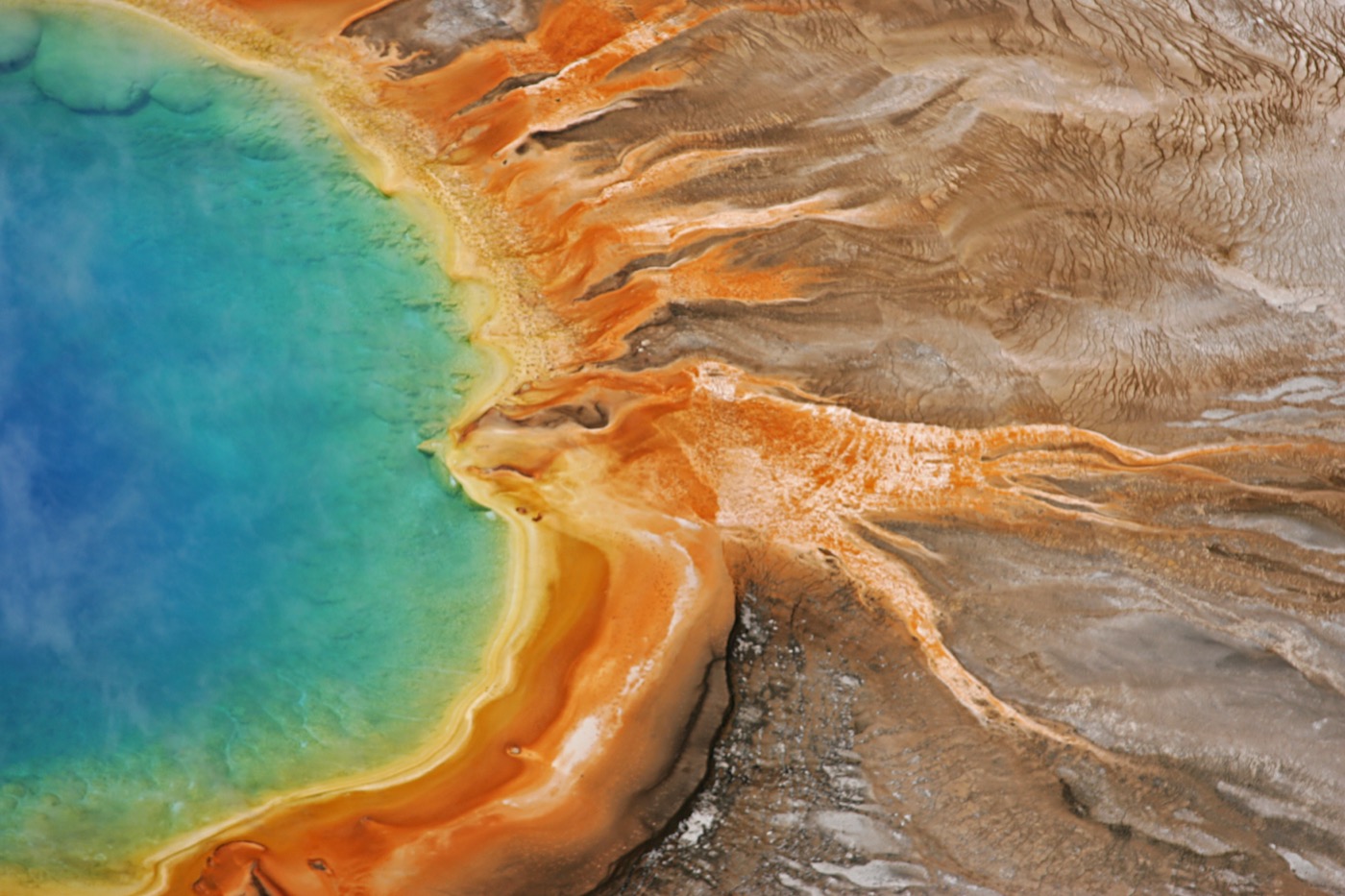
A short drive north brings you to Midway Geyser Basin and Grand Prismatic Spring, the rainbow-ringed pool on every Yellowstone postcard. The boardwalk takes you right alongside it, but at ground level the steam often blurs the color. For the iconic aerial-looking view, hike the Grand Prismatic Overlook Trail, a steady climb of about a mile round-trip from the Fairy Falls trailhead that delivers the photo you came for. If you've got the time and the legs, the Fairy Falls Trail continues to a 200-foot waterfall beyond the overlook.
Grab lunch here. Pack it, because services are spread thin and lines are long. Picnicking beside a geyser basin beats waiting 40 minutes for a burger.
Afternoon: the Grand Canyon of the Yellowstone
Now point east toward Canyon Village. This is the longer leg of the day. Budget a real hour-plus of driving, more if a bison herd decides to use the road. Your reward is the Grand Canyon of the Yellowstone, where the river plunges over the Lower Falls into a gorge of yellow and rust-colored rock. Artist Point gives you the classic Lower Falls view from a railed overlook with minimal walking, the right call if you're tired or traveling with little kids. For a steeper, more dramatic angle, the trails along the canyon rim drop you closer to the falls.
If everyone still has energy, the nearby Cascade Lake Trail is a gentler, flatter option through meadows that's far quieter than the canyon overlooks.
Evening: Hayden Valley wildlife
Save your last hour of daylight for Hayden Valley, between Canyon and Lake. Dawn and dusk are when the valley earns its reputation: herds of bison, often elk, sometimes a distant grizzly or wolf. Pull into a turnout, kill the engine, and just watch. Keep your distance. The park requires 25 yards from bison and 100 yards from bears and wolves, and a bison will close that gap faster than you'd believe. Binoculars do more good here than any zoom lens.
A note on dogs
If you're hoping to bring the dog along, plan around real limits. Pets are allowed in Yellowstone but only within about 100 feet of roads, parking lots, and campgrounds. Never on trails, boardwalks, or in the backcountry, and never near thermal features. On a hot day a dog can't be left in the car, and on a cool day there's almost nothing dog-friendly to actually do. For a park like this, the kennel back home is usually the kinder plan.
Planning the real thing? Nestward builds a day-by-day plan for this park in minutes, free, no subscription. See how it works →