 Nestward
Olympic National Park for Non-Hikers
The big views, the rainforest, and the coast: mostly from your car and a few short walks.
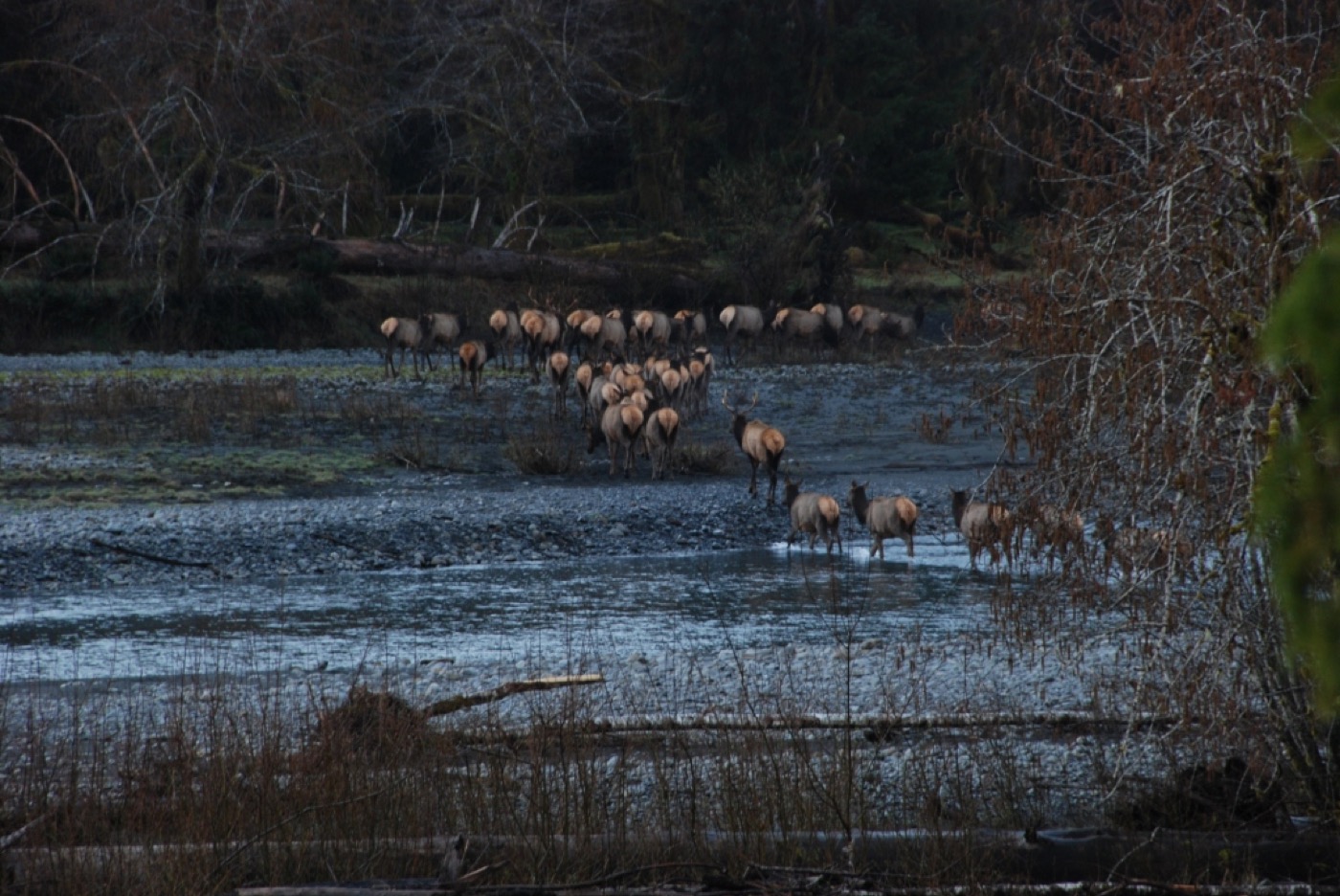
Here's the catch most guides skip: Olympic is enormous (nearly a million acres of glacier-capped peaks, temperate rainforest, and over 70 miles of wild coast) and almost none of it connects by road. But you don't need to backpack to see the good stuff. Some of the park's best views are a short walk, or no walk at all, from a parking lot.
Hurricane Ridge: the big mountain view, by car
If you do one thing without hiking, make it Hurricane Ridge. A paved road climbs about 17 miles from Port Angeles to a visitor center at roughly 5,200 feet, with the whole spine of the Olympic Mountains laid out in front of you. The view is the destination. You can take it in from the parking lot.
- Best time: Summer through early fall, when the road is reliably open and the meadows are clear. Winter access is limited and weather-dependent. Check the park's road status before you drive up.
- Short walks: Several paved and gentle gravel paths leave right from the visitor center if you want to stretch your legs without committing to a real hike.
- Wildlife: Black-tailed deer wander the meadows here, often unbothered by people. Keep your distance anyway.
Waterfalls and forest, zero effort
Two of the easiest payoffs in the park barely count as walks:
- Madison Falls: a paved, wheelchair-accessible path of just a couple hundred feet leads to a tall, mossy waterfall near the Elwha entrance. This is the textbook "everyone can do it" stop.
- Moments in Time Trail: a short, flat loop at Barnes Point on Lake Crescent that winds through old-growth forest and homestead history. Easy enough for little kids and grandparents in the same group.
- Salmon Cascades: a roadside overlook in the Sol Duc valley where, in fall, you can watch salmon leap upstream. A quick stop, big reward if the timing's right.
The coast: tide pools and sea stacks
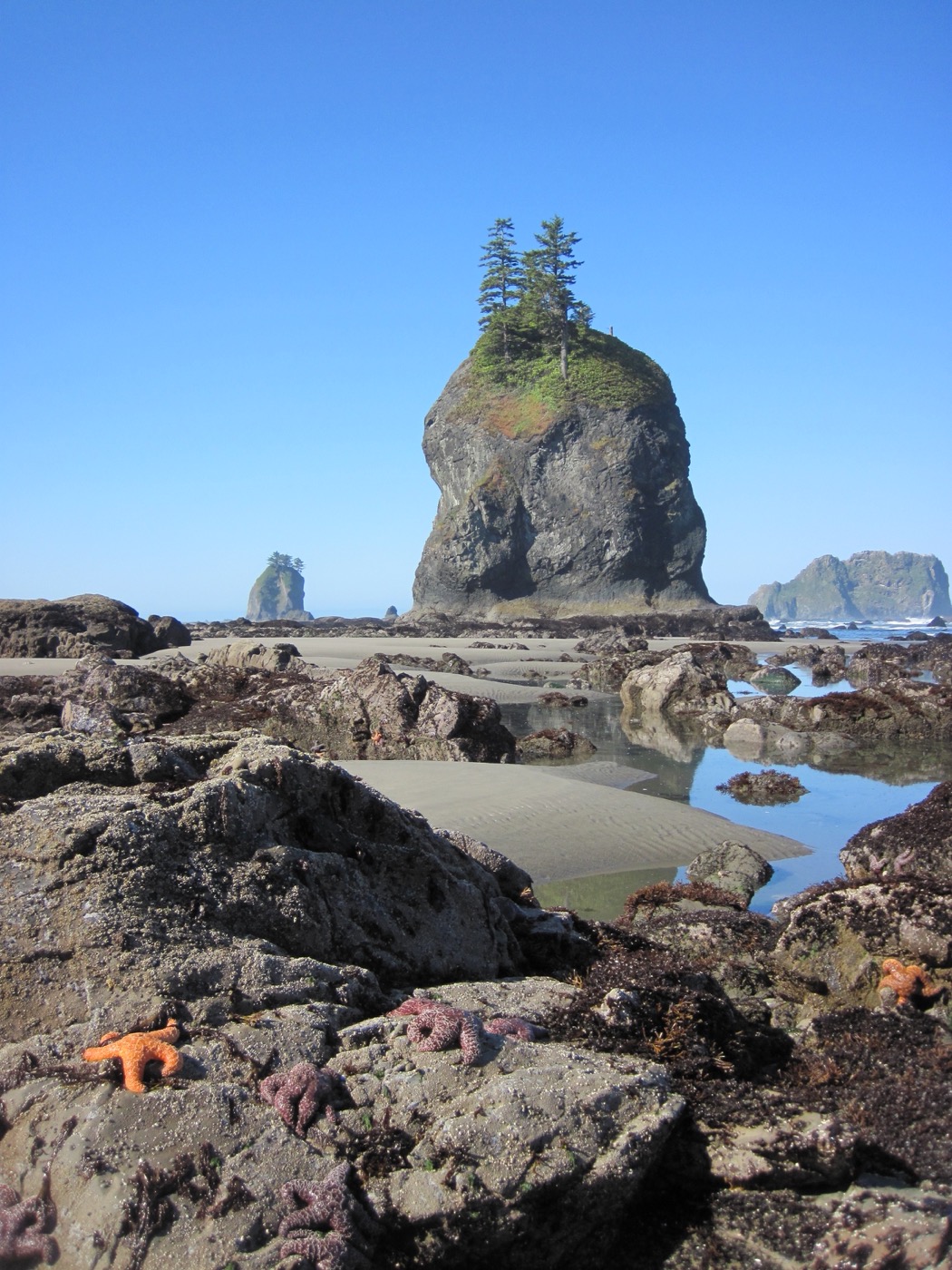
Olympic's beaches are some of the most dramatic in the country, and they're flat. Rialto Beach has a parking lot steps from the sand, with sea stacks and driftwood right there, though the walk to the famous Hole-in-the-Wall arch is longer and tide-dependent. For wildlife, Ruby Beach and other rocky stretches reveal tide pools full of orange sea stars and anemones at low tide.
One practical note: check a tide chart before you go. Tide pools only appear at low tide, and an incoming tide on a beach with headlands can strand you. It's the one Olympic logistics detail worth not winging.
Getting in, and how it's all laid out
The entrance fee is $30 per private vehicle, good for seven consecutive days, handy because Olympic isn't a one-loop park. Hurricane Ridge, Lake Crescent, the coast, and the Hoh Rain Forest are each their own drive off Highway 101, which wraps the peninsula. Plan on real driving time between them; trying to cram them into one day means spending it in the car.
The park is open 24 hours year-round, but roads, campgrounds, and facilities run seasonally. The driest, most reliable months are July, August, and September. Even then, pack layers. It's common for the coast, rainforest, and mountains to have completely different weather on the same afternoon.
Bringing the dog? Read this first
Be honest with yourself here: Olympic is largely off-limits to pets. Like most national parks, dogs are restricted to roads, parking areas, campgrounds, and a few designated spots, not the trails or the backcountry. The notable exceptions are parts of the beaches between specific points and the Spruce Railroad Trail near Lake Crescent. If your trip is built around hiking with your dog, Olympic will frustrate you. If it's built around scenic drives and a few accessible spots, you can make it work. Just confirm the current pet-friendly areas with the park before you count on them.
Planning the real thing? Nestward builds a day-by-day plan for this park in minutes, free, no subscription. See how it works →