 Nestward
Mount Rainier for Non-Hikers
The big views, minus the big climb.
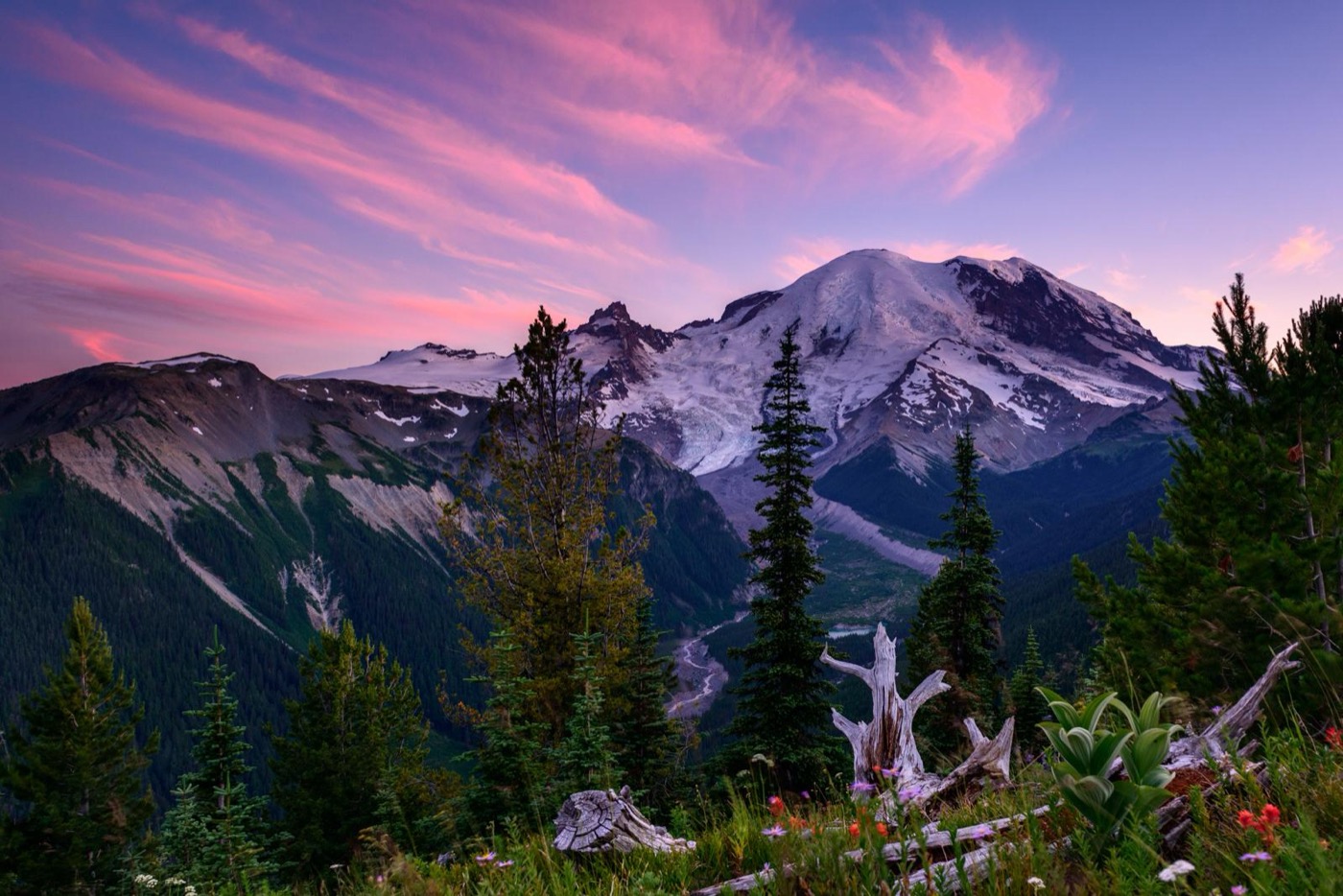
Here is the truth: Mount Rainier is one of the most rewarding parks in the country for people who do not want to hike. It rises 14,410 feet over Washington, it is the most glaciated peak in the contiguous U.S., and a paved road delivers you straight to subalpine meadows with the mountain filling your windshield. You do not need boots and a trekking pole to feel small in the best way.
Start with the scenic drives
The driving is the main event here, and it is genuinely spectacular. Two paved corridors get you to the views.
- Paradise (southwest side). This is the headliner. From the Nisqually Entrance near Ashford, the road climbs through old-growth forest to Paradise at 5,400 feet, where the meadows and the mountain are right there. The Henry M. Jackson Visitor Center has parking, restrooms, food, and floor-to-ceiling views. Open year-round, though the upper road can close in winter storms.
- Sunrise (northeast side). The highest point you can reach by car in the park, around 6,400 feet, and arguably the more dramatic mountain view. The catch: Sunrise Road is seasonal, typically open late June to mid-October. If you are visiting outside that window, it is simply closed.
- Stevens Canyon Road and the loop around. Linking the Paradise side to the Ohanapecosh side, Stevens Canyon Road is a string of pull-offs, canyon walls, and waterfalls. Combine it with the longer "road trip around the mountain" and you can circle Rainier in a day, all from the car.
Viewpoints you can reach in a few steps
These are the spots where the payoff is enormous and the walking is minimal.
- Reflection Lakes. On the road below Paradise, these roadside lakes mirror Mount Rainier on a calm morning. Park, walk to the shore, done. One of the most photographed views in the state.
- Inspiration Point and the Paradise overlooks. Several signed pull-offs along the Paradise loop give you the meadow-and-mountain shot without leaving the pavement for more than a minute.
- Sunrise Point. A hairpin overlook on the drive up to Sunrise, with a sweeping view across the valley to the peak.
- Box Canyon. A short, mostly flat loop off Stevens Canyon Road over a startlingly narrow, deep gorge. High drama, low effort.
Short walks worth the small effort
If you are up for a gentle stroll rather than a hike, a handful of paths deliver outsized scenery. None of these require serious fitness, though Rainier's paved meadow trails do gain a little elevation.
- Silver Falls (Ohanapecosh). A forested, well-graded loop to a powerful waterfall on the Ohanapecosh River. Shaded, cool, and a good cloudy-day option when the summit is hidden.
- The Grove of the Patriarchs area (Ohanapecosh). Mount Rainier protects some of the few remaining old-growth forests in the Cascades, with towering cedars and Douglas-firs. Note: the river bridge here has had access issues in recent years, so check current conditions before counting on it.
- Nisqually Vista (Paradise). A short paved loop from the Paradise lot with glacier views, gentle enough for most.
- Longmire. The historic district near the Nisqually Entrance has flat, easy strolls past the National Park Inn, a small museum, the Valor Memorial, and the Trail of the Shadows meadow loop. A relaxed first or last stop.
Doing it with kids
Rainier is forgiving for families. Sunrise and Paradise both have visitor centers with restrooms, food, and exhibits, so you are never far from a bathroom or a snack. The meadows are crawling with marmots in summer, which kids love, and the paved overlooks mean little legs do not have to go far. Pick up a Junior Ranger booklet at any visitor center. If clouds swallow the mountain, the waterfall walks and the forest at Ohanapecosh still deliver a good day.
Practical logistics
- Entrance fee: $30 per vehicle for seven days, or $55 for the park annual pass. Federal Interagency passes are accepted.
- Timed entry: In peak summer, Rainier has used a timed-entry reservation system for the Paradise and Sunrise corridors. Check the park site before you go so you are not turned away.
- Weather: Cool and often cloudy. Summer highs sit in the 60s and 70s; July and August are the sunniest months. The mountain hides behind clouds more often than first-timers expect, so build in flexibility.
- Closures: Sunrise, Stevens Canyon, and the eastern entrances close seasonally, roughly mid-October to late May. The Nisqually Entrance to Longmire and Paradise stays open year-round. The Carbon River area is closed to vehicles in 2026 due to a bridge closure.
- Gas and food: Limited inside the park. Fill up and stock snacks in Ashford or Enumclaw before you enter.
Planning the trip? Nestward builds a day-by-day plan in minutes, free, no subscription. See how it works →