 Nestward
Bryce Canyon With Kids
A family guide to the hoodoos: easy options first, realistic pacing throughout.
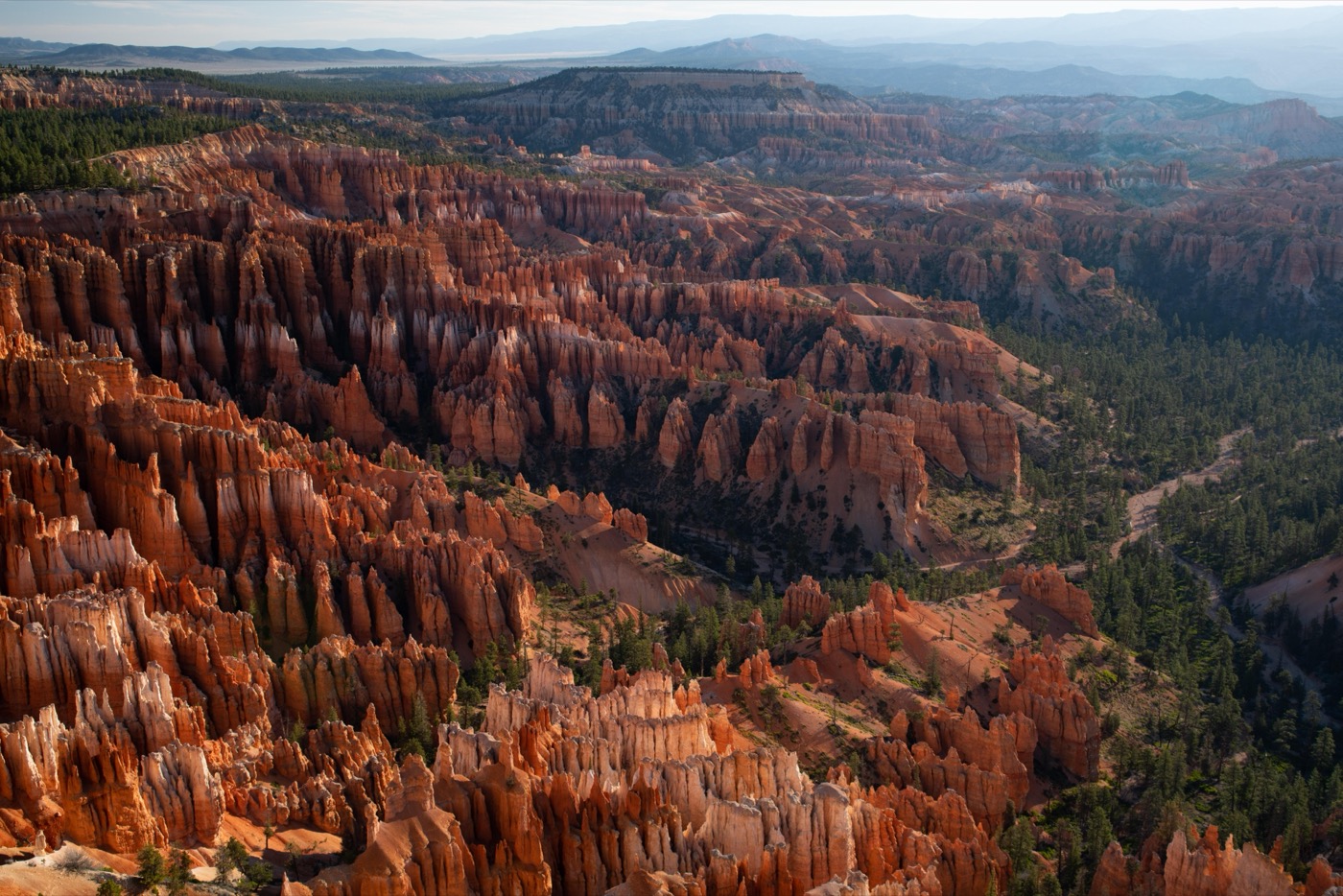
Bryce Canyon holds the largest concentration of hoodoos (those irregular columns of rock) found anywhere on Earth, and the good news for families is that the best views are also the easiest to reach. The catch is the elevation: the rim sits around 8,000 feet, so little legs tire faster than they would at home, and weather flips fast. Plan for short days, big payoffs, and a snack in every pocket.
Start at the rim: the easiest, biggest views
If you only do one thing with young kids, walk a stretch of the Rim Trail along the first three miles of the park road. The viewpoints (Sunrise, Sunset, Inspiration, and Bryce points) string together over paved or packed-dirt ground that's mostly flat, and every overlook drops you straight into a sea of orange spires. You can do as little as the five-minute walk between Sunrise and Sunset Point and still see the headline view.
- Sunrise Point: the most accessible 360-degree overlook, and the launching pad for the one hike below.
- Inspiration Point: a short uphill from the parking lot, with the most dramatic top-down look at the amphitheater.
- Rainbow Point and Yovimpa Point: at the far south end of the road, the park's highest spots, with 100-mile views and a fraction of the crowds. Long drive, easy walk.
The one big hike worth the effort: Queen's Garden
When families ask for a single hike below the rim, the answer is the Queen's Garden Trail from Sunrise Point. It's the gentlest way down among the hoodoos. You descend a series of switchbacks, weave past towers and through a couple of short rock tunnels, and come out beside the formation everyone stops to photograph. Down-and-back is roughly 1.8 miles and very doable for kids who can handle a bit of distance.
Strong hikers can link it into the Queen's/Navajo Combination Loop, which adds the Navajo Loop's famous Wall Street switchbacks for a 2.9-mile circuit. One warning: every trail below the rim ends with a climb back up, at altitude. Going down feels easy; coming up is the real workout. Budget more time and water than the mileage suggests, and turn around early if the mood is going.
Altitude, weather, and the meltdown math
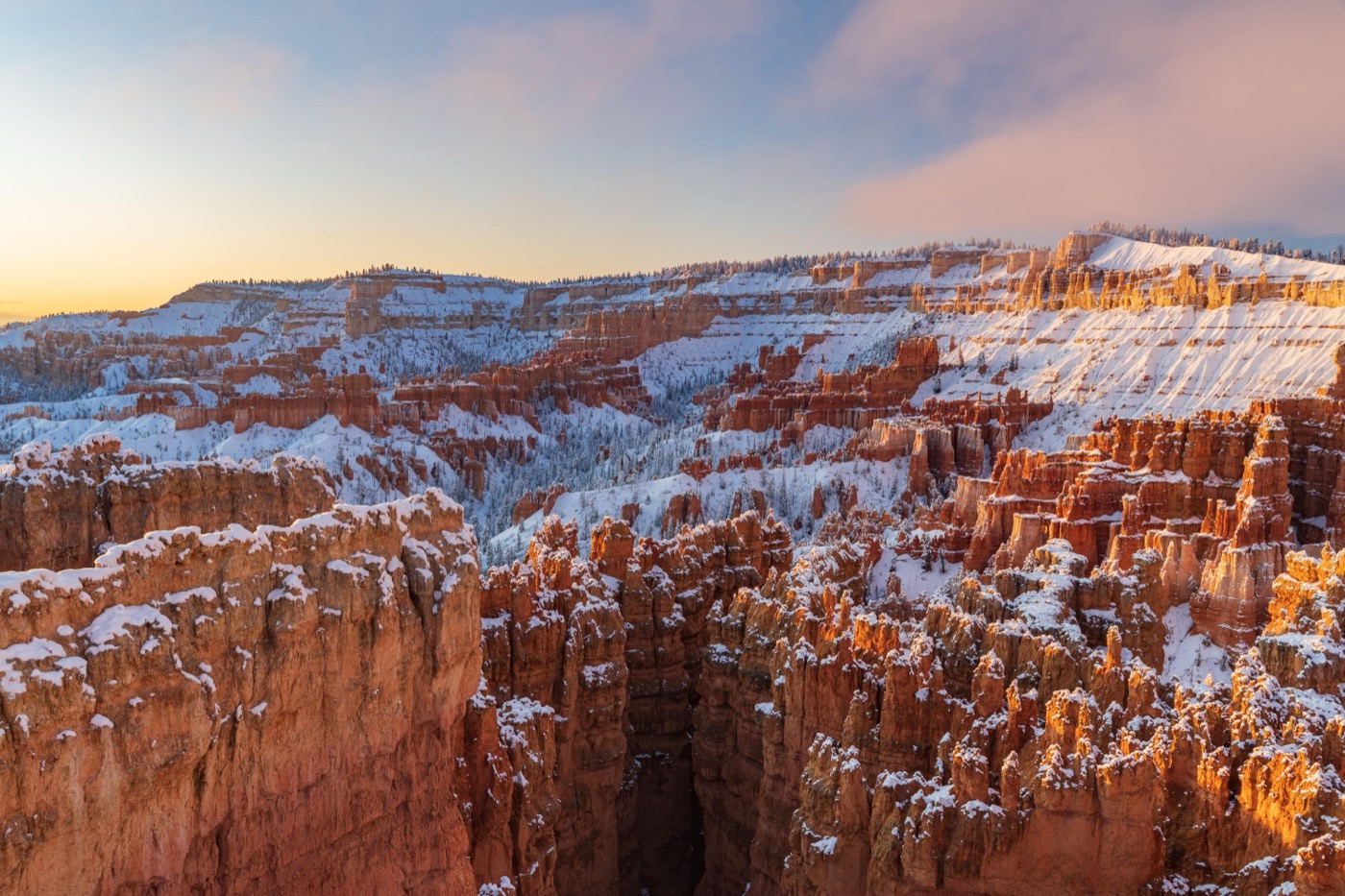
This is high country, and it behaves like it. From October through May the temperature drops below freezing nearly every night, and snow lingers. Winter sunrises at Sunset Point can be downright frozen. Summer highs land in the comfortable 70s and 80s, but July and August bring near-daily afternoon thunderstorms, so do the exposed rim and hoodoo hikes in the morning.
- Hydrate hard. The thin, dry air dehydrates kids fast and they won't notice until they're cranky.
- Layer. A clear 8,000-foot morning can be cold; pack a fleece even in July.
- Sun and shade. There's little shade on the rim. Hats and sunscreen, not optional.
Junior Rangers, stars, and easy wins
Bryce makes it easy to fill a low-key day. Kids can earn a Junior Ranger badge with a booklet from the visitor center, and rangers run programs worth building an evening around: a Rim Walk with a Ranger, a Hoodoo Geology Talk, and the Bryce Canyon Evening Program. Because the park is open 24 hours, you can also catch one of the darkest skies in the country. It's a Gold Tier International Dark Sky Park, and the Milky Way over the hoodoos is a genuinely jaw-dropping family moment.
One more practical note: there are picnic areas if you'd rather pack lunch than fight for a table, and a shuttle runs in peak season that spares you the parking scramble at the busy amphitheater stops.
Bringing the dog? Read this first
Be honest with yourself before you load the dog in the car. Like most national parks, Bryce keeps pets off the trails entirely. No hoodoo hikes, no Queen's Garden, no descents below the rim. Leashed dogs are allowed only on paved areas: the campgrounds, the paved viewpoint surfaces, and the paved section of the Rim Trail between Sunrise and Sunset Point. That paved rim stretch is genuinely scenic, so a dog isn't pointless here, but plan for a kennel or a pet sitter if you want to do the real hiking.
Planning the real thing? Nestward builds a day-by-day plan for this park in minutes, free, no subscription. See how it works →