 Nestward
The Best Time to Visit Joshua Tree
A month-by-month guide to crowds, weather, and the desert's sweet spots.
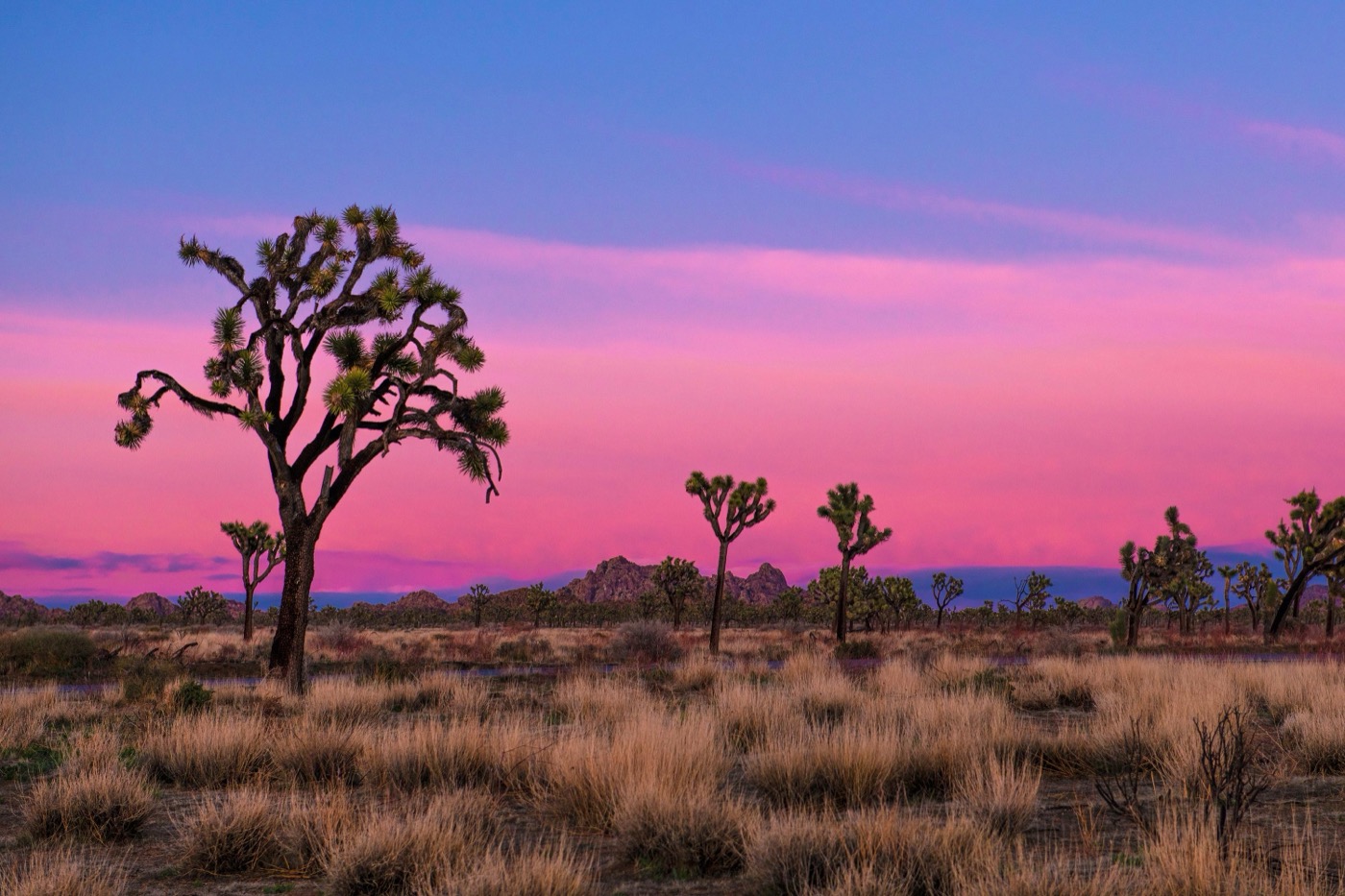
Joshua Tree is where the Mojave and Colorado deserts meet, and the desert sets the rules. The difference between a great trip and a miserable one usually comes down to the calendar, not the itinerary. Here's when to go, when to think twice, and what each month actually feels like on the ground.
The short answer: spring and fall
If you only remember one thing, remember this: aim for mid-October through November, or March through April. The park itself says it best: visitation peaks during spring wildflower season and the heat of summer thins the crowds. Spring and fall give you average highs near 85°F and lows around 50°F, which is about as pleasant as the desert gets.
Those same shoulder seasons are also when everyone else shows up. You trade perfect weather for full campgrounds and a line at the West Entrance. It's a fair trade, but plan for it.
Month by month
- December–February (winter): Days hover around 60°F, cool, clear, and quiet. Nights drop below freezing and it can snow at higher elevations. Bring real layers. Crowds are light outside the holidays, so this is the season for solitude if you don't mind a cold morning. Hiking Barker Dam Trail or Hidden Valley in the crisp air is a genuine pleasure.
- March–April (spring): The headliner. Wildflowers, warm-but-not-hot days, and the longest stretch of comfortable weather. It's also the single busiest window of the year. Weekends near the West Entrance back up badly. Arrive before 8 a.m. or after 3 p.m. The Cholla Cactus Garden and a drive down Park Boulevard are at their best now.
- May: A quietly excellent compromise. Crowds taper as temperatures climb, but it's not yet brutal. Start hikes like the Fortynine Palms Oasis early and you'll have cool mornings mostly to yourself.
- June–September (summer): Hot. Daytime regularly tops 100°F and nights barely dip below 75°F. The park stays open 24/7, but afternoon hiking is genuinely dangerous in this heat. This is low season for good reason. If you come, treat it as a dawn-and-dusk park: hike before sunrise, then save the day for the air-conditioned car and the night sky.
- October–November (fall): The other sweet spot, and arguably the better one for families. Heat breaks, crowds rebuild gradually rather than all at once, and the light is gorgeous. Skull Rock and the Boy Scout Trail are ideal in this stretch.
Closures and things that catch people off guard
Joshua Tree is open every day of the year, all day. There's no seasonal road shutdown to plan around. The real constraints are subtler:
- Heat closes nothing but limits everything. Trailheads stay open in summer; your body is the limiting factor. Rangers pull people off trails for heat illness every season.
- Keys Ranch is tour-only. The historic ranch can be visited only on a ranger-guided tour, and those book up. If it's on your list, reserve ahead.
- Some areas are day-use only. Plan overnight stays around the campgrounds, not random pullouts.
- Water is scarce inside the park. Fill up in Twentynine Palms or Yucca Valley before you enter. There's very little once you're past the gate.
Don't sleep on the night sky
Whatever month you choose, build in at least one night. Joshua Tree has some of the darkest skies in Southern California, and stargazing here is a headline event, not an afterthought. Winter brings the crispest, clearest views; summer nights are warm enough that kids will happily stay up. Check the moon phase. A new moon weekend turns the Milky Way into the main attraction.
So when should you go?
For most families, late October or early November is the pick: warm days, cool nights, and crowds that haven't fully landed. If you want wildflowers and don't mind the company, go in late March. Want the park nearly to yourself? Bundle up and come in January. The only window to approach with real caution is July and August. It's possible, but only if you're disciplined about heat and willing to flip your day upside down.
Planning the trip? Nestward builds a day-by-day plan in minutes, free, no subscription. See how it works →