 Nestward
Arches National Park With Kids
A family guide to the easy arches, the desert heat, and realistic pacing for short legs.
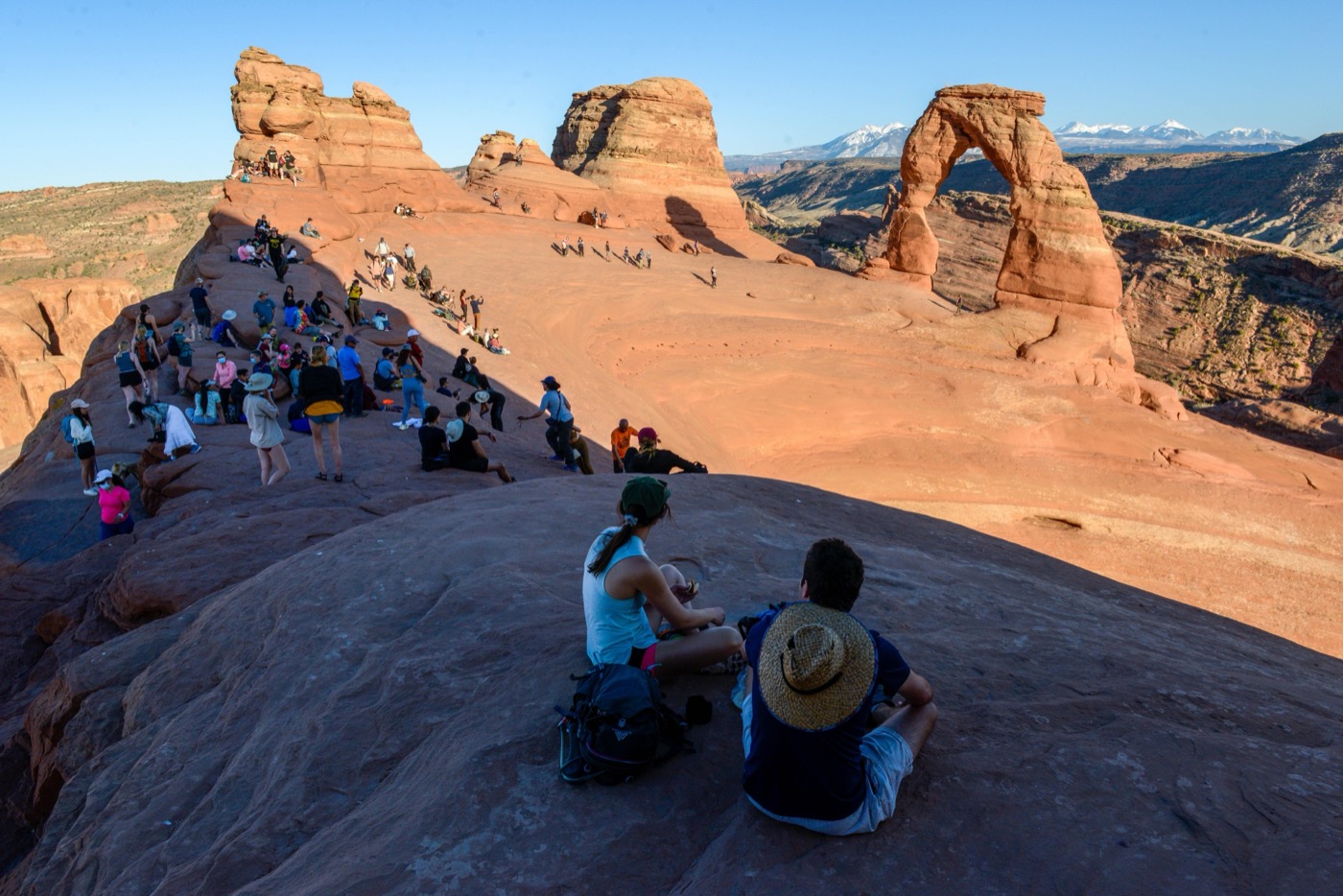
Arches packs over 2,000 natural stone arches, soaring pinnacles, and giant balanced rocks into a compact red-rock landscape just outside Moab, Utah. That density is the gift for families: you can see jaw-dropping geology without long death-march hikes. The catch is the heat. Summer days top 100°F, and a "high desert" means temperature swings of 40 degrees in a single day. Plan around the sun and the kids will love it.
Start at the visitor center, then drive the scenic road
Begin at the Arches Visitor Center, just off US 191 five miles north of Moab. Grab water, hit the bathrooms, and pick up a Junior Ranger booklet. The Arches Junior Ranger Program is one of the best ways to keep kids engaged between stops, since they're hunting for things to fill in the activity book all day.
From there, much of the park genuinely works from the road. The NPS literally lists "Enjoy Arches from the Road" as a thing to do, and they're not kidding. Balanced Rock, the Windows pullouts, and the Fiery Furnace overlook are all short walks from parking, which is a lifesaver on a hot afternoon or with a toddler who has decided walking is over.
The easiest arch hikes for short legs
- The Windows section: a cluster of huge arches (North Window, South Window, Turret Arch) reached by wide, mostly flat gravel loops under a mile. Biggest reward for the least effort. This is the one to do if you only do one.
- Balanced Rock: a roughly third-of-a-mile loop around a 128-foot boulder perched on a pedestal. Flat, quick, and kids love that it looks like it's about to fall.
- Park Avenue: you can just walk to the viewpoint and peer down the canyon of towering rock walls. Going down into it and back is steeper; turn around whenever the kids are done.
- Sand Dune Arch: a short, shaded walk that squeezes between rock fins into a sandy pocket. The deep sand is basically a natural playground, and the shade is a real asset midday.
The famous one, Delicate Arch, is a 3-mile round trip with serious exposure, slickrock, and no shade. It's doable for older, hike-tested kids in cool weather with lots of water, but it's a clear "no" for little ones in summer. You can still see Delicate Arch from the lower viewpoint near Wolfe Ranch without the climb.
Beat the heat and the crowds
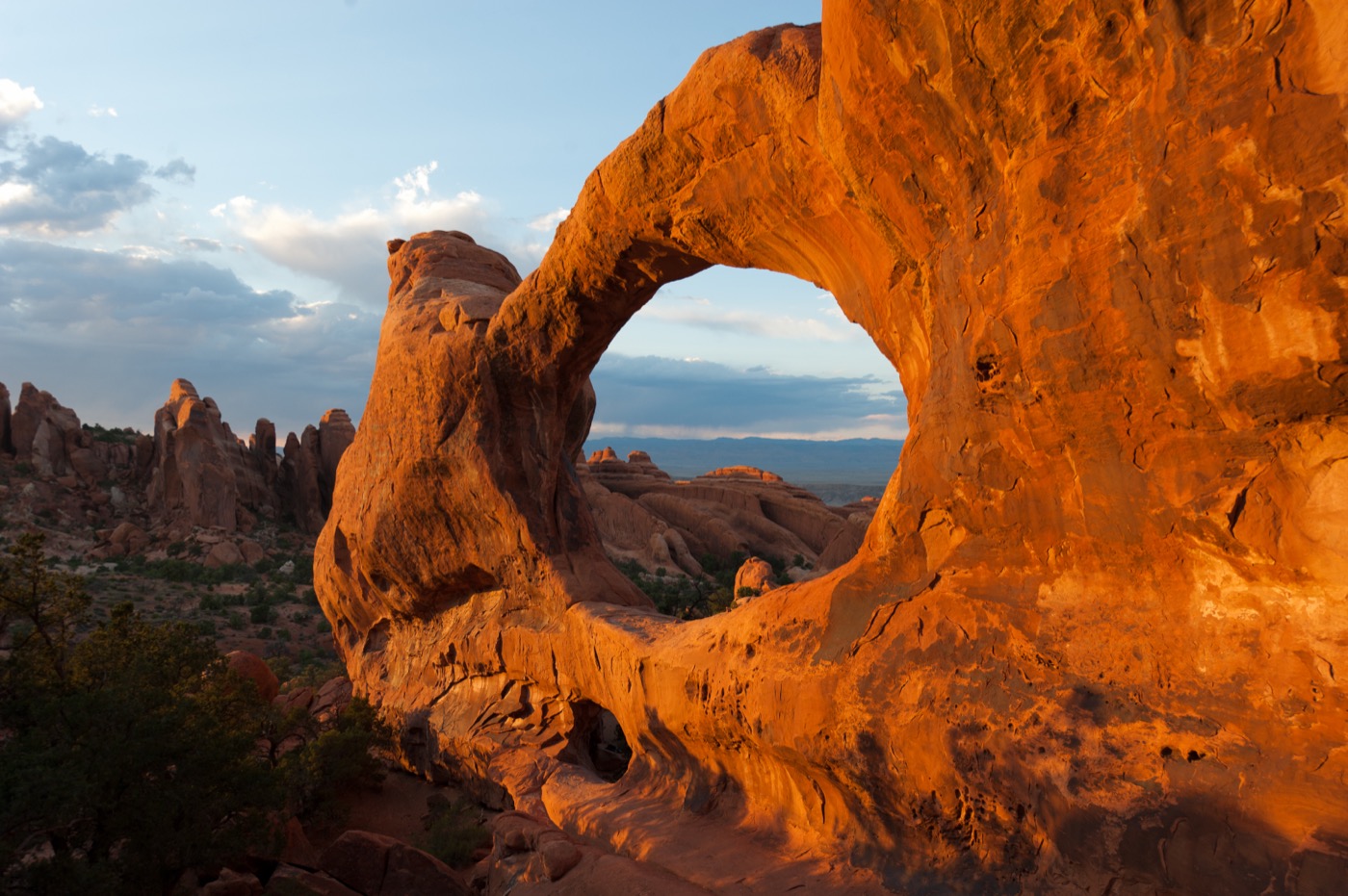
Arches is busiest March through October. The park's own advice: enter before 8 a.m. or after 3 p.m. to dodge traffic backups at the entrance. Early morning is the family sweet spot: cooler air, better light, and most arches still in shade. Save the road-and-viewpoint touring for the blazing midday hours and the longer walks for first or last light.
Spring (April–May) and fall (mid-September–October) are the comfortable seasons, with highs in the 60s to 80s. Bring far more water than feels reasonable, sun hats, and real sun protection. There is almost no shade out here. Check current entry rules before you go, since Arches has used a timed-entry reservation system during peak months in recent years; that can change year to year, so confirm on the NPS site.
For older kids who want more
The Devils Garden area at the end of the road has a string of arches, including the dramatic Double O Arch, with the trail getting more rugged the farther you go. The first arch (Landscape Arch) is a reasonable out-and-back; beyond it, the route involves scrambling along narrow rock fins, fun for sure-footed older kids but not for strollers. The Fiery Furnace is a maze of fins that requires a permit or a ranger-led tour, so it needs advance planning rather than a spur-of-the-moment stop.
One quietly great family activity: stargazing. Arches has superb dark skies, and the park runs stargazing events in southeast Utah. Panorama Point is an easy spot to pull over after dark and let kids see the Milky Way, often a bigger hit than any arch.
A note on dogs
If you're traveling with the family dog, leave them out of the hiking plans. Like most national parks, Arches keeps pets out of nearly everything that makes it worth visiting. Dogs are not allowed on any trails, in the backcountry, or in the Fiery Furnace. They're limited to roads, parking areas, and campgrounds, on a leash. In summer heat a car or campsite is no place for a dog either, so this is a trip to plan a kennel around if you can.
Planning the real thing? Nestward builds a day-by-day plan for this park in minutes, free with no subscription. See how it works →