 Nestward
The Best Time to Visit Arches National Park
A month-by-month read on crowds, desert heat, and the seasons that actually work.
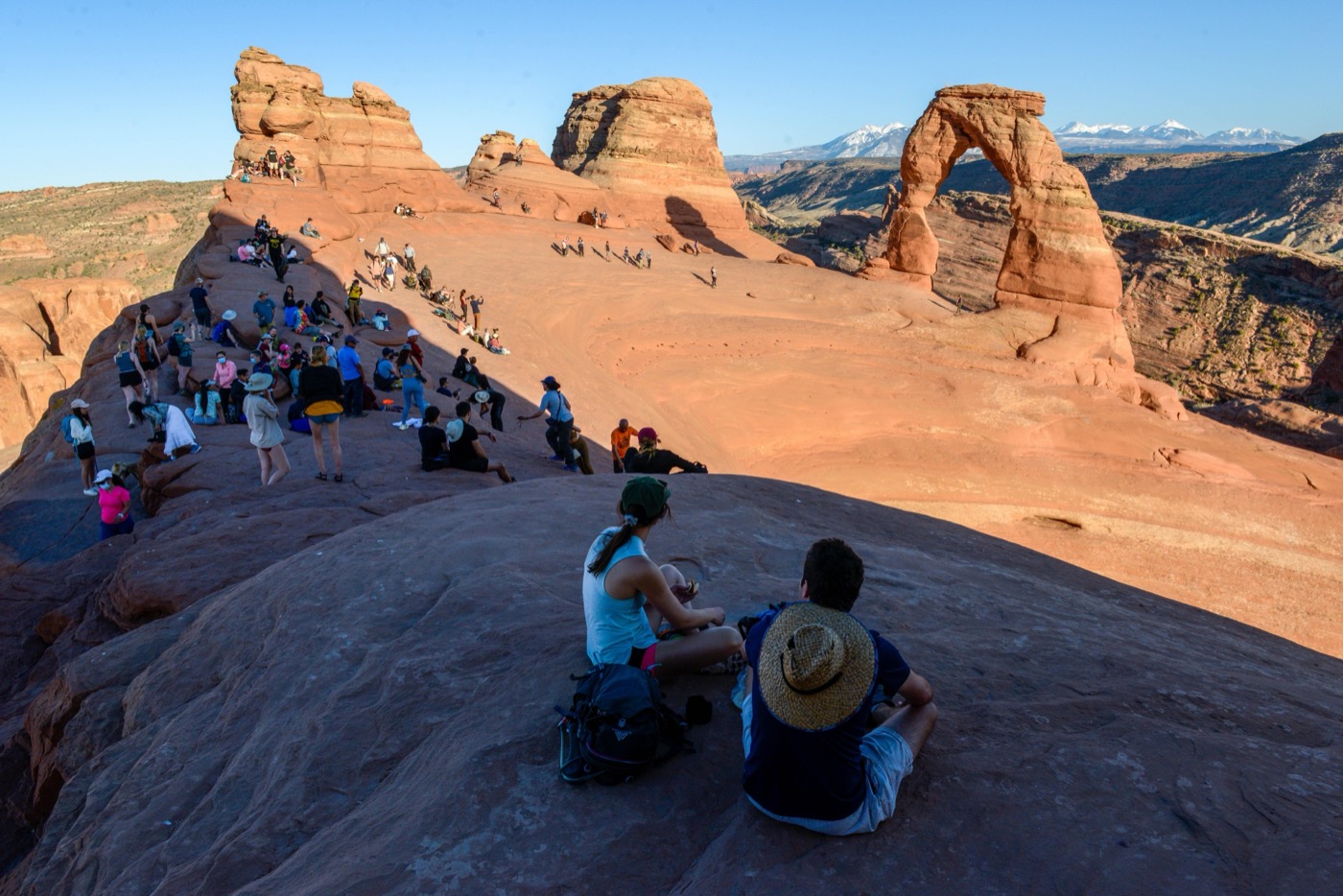
Arches packs over 2,000 stone arches into a compact stretch of southeast Utah, which is wonderful and also the whole problem: everyone wants to see the same red rock at the same time. Get the season right and it's one of the easiest national parks to enjoy. Get it wrong and you're idling in a line at the entrance gate in 100-degree heat. Here's how the calendar actually breaks down.
The short answer: spring and fall
April-May and mid-September through October are the sweet spots, full stop. Daytime highs sit in the 60s to 80s, nights are cool but not brutal, and the trails are pleasant instead of punishing. The catch is that everyone else knows this too, so these are also the busiest months. The park itself recommends entering before 8 a.m. or after 3 p.m. to dodge the worst of the gate traffic between March and October. Take that seriously.
If your priority is empty trails over comfortable weather, late fall and winter are quietly excellent. More on that below.
Month by month
- December-February: Cold and quiet. Highs run 30 to 50 F, nights drop near zero, and snow can dust the red rock for genuinely surreal photos. Trails may be icy, and microspikes help on the slickrock to Delicate Arch. You'll have the place nearly to yourself.
- March: Crowds wake up, especially around spring break. Weather is unpredictable: warm afternoons, cold mornings, the occasional storm. A gamble, but a livable one.
- April-May: Peak season and peak conditions. Wildflowers, ideal hiking temps, long daylight. Book lodging in Moab months ahead and arrive early or late to beat the gate line.
- June: The heat arrives. Highs push into the 90s and climb. Mornings are still good; midday hikes are not.
- July-August: Hot, often over 100 F, with afternoon monsoon thunderstorms that can flash-flood washes and shut down canyoneering routes. Hike at dawn, retreat by 10 a.m. Strenuous exertion midday is genuinely risky.
- September: The first half is still hot; the back half cools into the spring-like sweet spot. A great pick if you can land late in the month.
- October: Arguably the best single month: warm days, crisp nights, golden light, and crowds easing off after the kids go back to school.
- November: Cooling fast and emptying out. Short days but big solitude. An underrated time to come.
Crowds, heat, and the things that actually close
Arches is a high-desert park on the Colorado Plateau, which means temperatures can swing more than 40 degrees in a single day. Pack layers in every season. The real planning constraint isn't closures (the park is open 24 hours a day, year-round). It's the entrance line, which can back up onto US 191 on spring and fall mornings.
A few seasonal notes worth knowing:
- Fiery Furnace requires a permit or a ranger-led tour, and the guided tours run on a seasonal schedule (roughly spring through fall). Reserve well ahead. They fill.
- Canyoneering and slot routes are dangerous during July-August monsoon storms; check forecasts and flash-flood warnings.
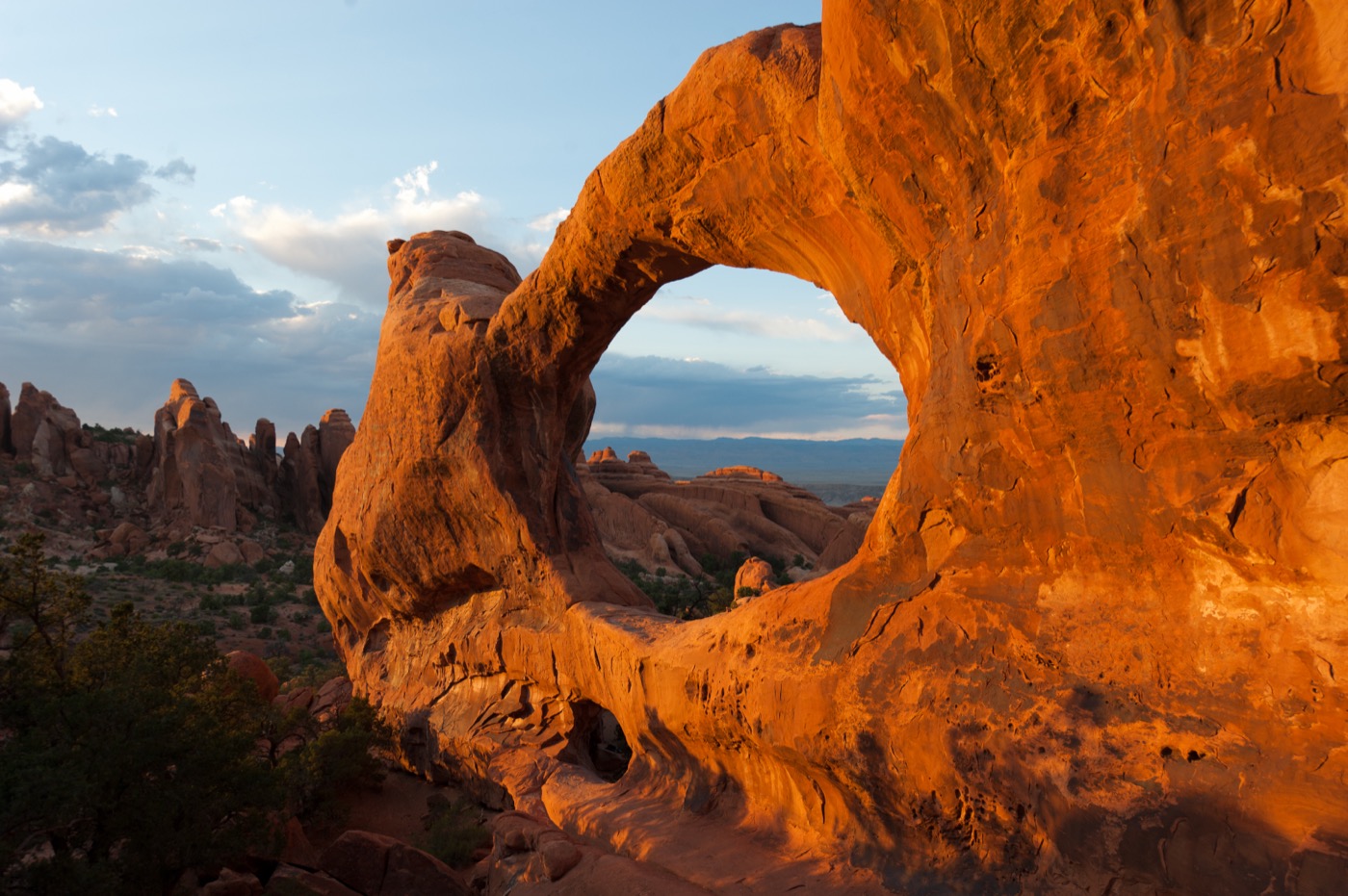
- Devils Garden, home to Double O Arch and the park's longest maintained trail, gets hot and exposed in summer. Save it for a cool morning.
- Winter ice on the slickrock approach to Delicate Arch turns an easy hike into a careful one.
Time your day, not just your season
Whatever month you choose, the hour matters as much as the date. Sunrise gives you cool air, soft light, and an empty Park Avenue trail. Midday is for the visitor center, a scenic drive, or hiding from the sun. Sunset at Delicate Arch is spectacular but shoulder-to-shoulder. Go for the experience, not the solitude. And after dark, Arches is a certified dark-sky destination: Panorama Point is an easy stargazing stop, and the park runs astronomy events in southeast Utah through the warmer months.
Traveling with kids? The Junior Ranger program is a reliable way to keep them engaged between viewpoints, and the short, dramatic walks (Park Avenue, the Windows, Double O Arch) pay off without a death march.
Planning the trip? Nestward builds a day-by-day plan in minutes, free with no subscription. See how it works →