 Nestward
Zion for Non-Hikers
How to see the big cliffs without the big climbs.
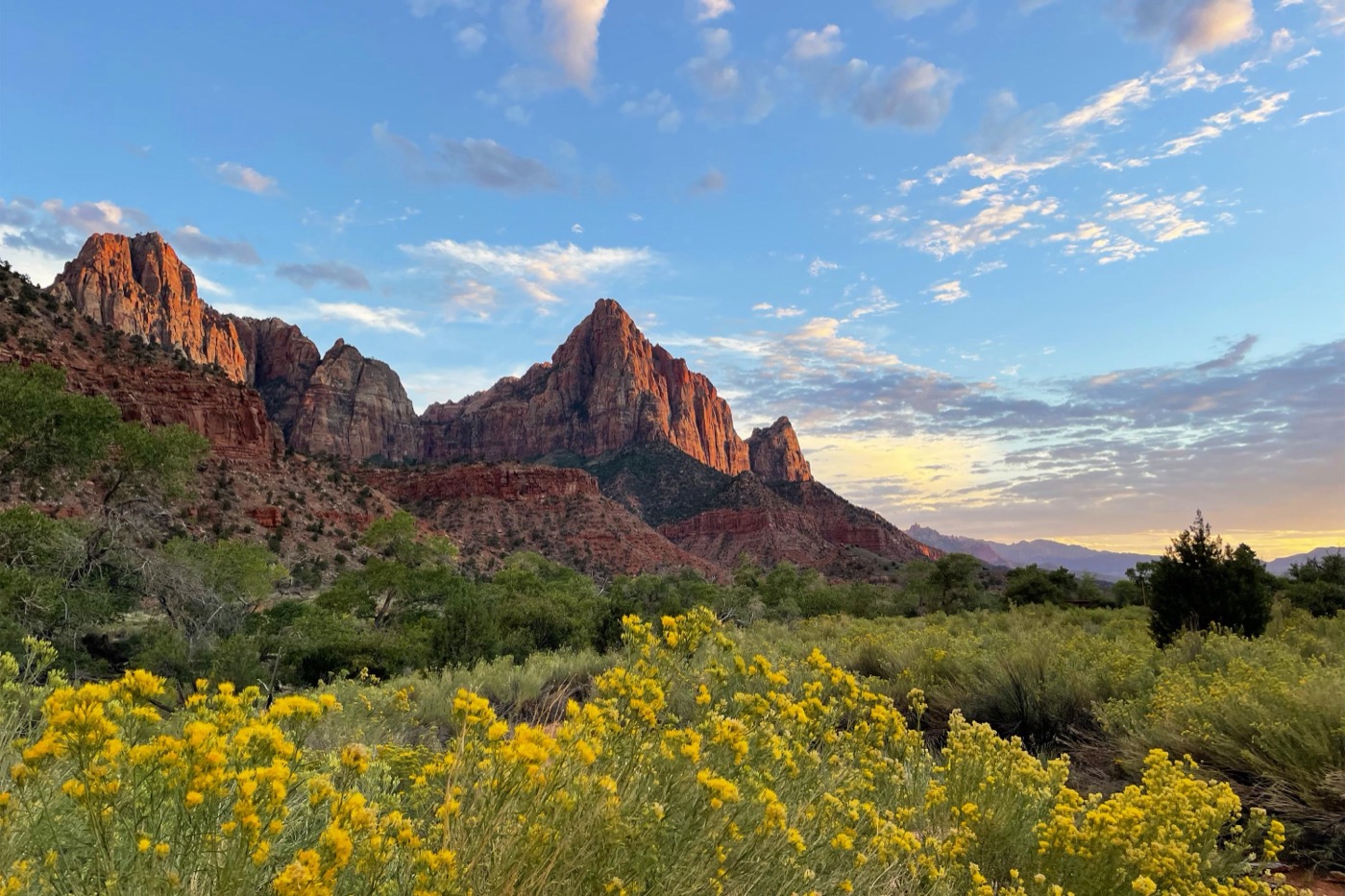
Zion has a reputation as a hiker's park: Angels Landing, the chains, the wet slog up the Narrows. Here's the truth: the best thing about Zion is the canyon itself, and you do not have to earn the view with your calves. The massive sandstone cliffs of cream, pink, and red soar straight up from a flat green canyon floor, and you can take almost all of it in from a shuttle seat, a paved path, or a turnout on a drive.
Let the shuttle do the work
For most of the year, the Zion Canyon Scenic Drive is closed to private cars and served by a free shuttle. That sounds like a hassle. It isn't. It's a gift to non-hikers. You board at the Zion Canyon Visitor Center (or in Springdale, just outside the gate) and the bus loops up the canyon with narration, stopping at the major viewpoints. You can ride the whole route, stay on the bus, and see the towering walls without taking a single step on a trail.
Practical notes:
- Shuttles are free; park entrance is $35 per private vehicle, valid up to 7 days.
- Get on early. By mid-morning in spring and fall the lines at the visitor center stack up. A first-thing ride also means softer light and cooler air.
- You can hop off and back on at any stop, so treat it as a flexible sampler. Ride to the top, then work your way back down at your own pace.
The flat walks that are actually worth it
"Non-hiker" doesn't have to mean "stayed in the car." A few of Zion's best spots sit at the end of short, mostly level, paved paths, the kind you can do in sneakers with kids or grandparents.
- Riverside Walk: a paved, roughly two-mile round-trip along the Virgin River at the canyon's end. Shade, hanging gardens, the river beside you, and the canyon narrowing overhead. This is the path that leads to the Narrows, but you can simply turn around at the river and skip the wading entirely.
- Lower Emerald Pool Trail: a short paved walk to a pool and a misting waterfall that drips over an overhang you walk beneath. The lower pool is the easy one; the middle and upper pools get steeper, so stop where it stops being fun.
- Weeping Rock: historically a very short, steep paved path to a dripping rock alcove. Check current status at the visitor center, as rockfall has closed it in the past.
Viewpoints you can drive (or nearly drive) to
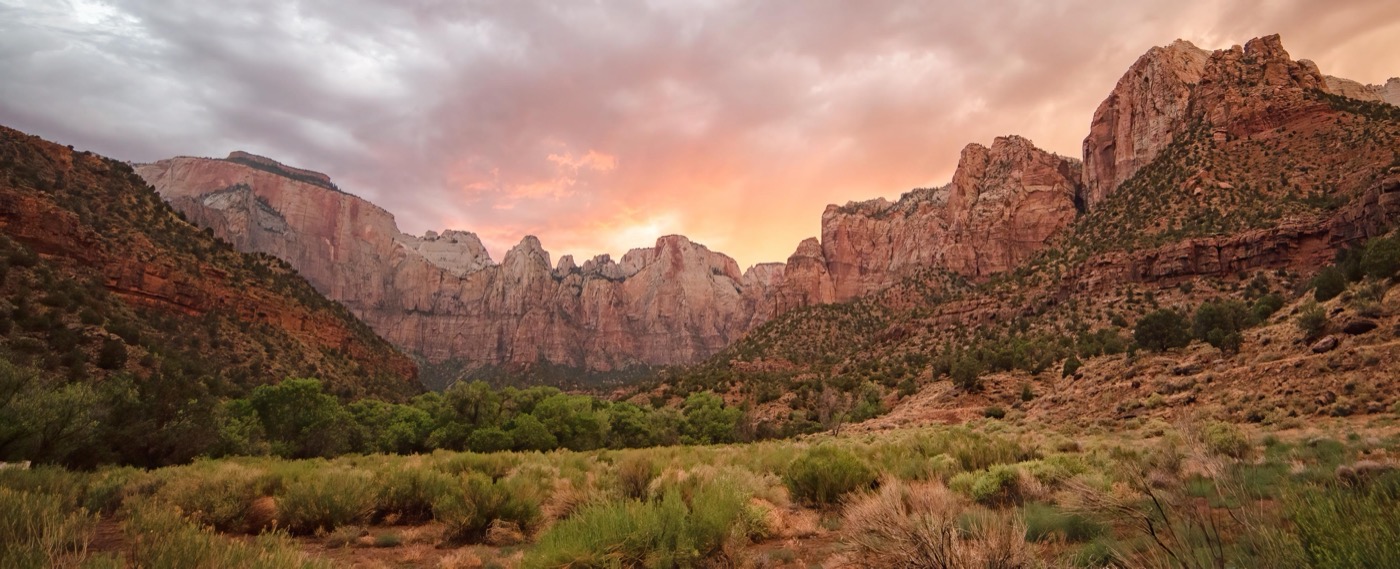
If walking far isn't on the menu, Zion still delivers. From the visitor center area you can take in the Towers of the Virgin, a wall of red-and-white sandstone that's especially good at sunset. The Watchman, the postcard peak above the canyon mouth, is visible from the bridge and the campground area without any climbing.
For a quieter, car-friendly experience, drive to the Kolob Canyons section in the park's northwest corner, off I-15. It has its own entrance, its own short scenic road, and far fewer people. At the end sits the Timber Creek Overlook, a big payoff for a tiny walk, with finger canyons glowing red in the afternoon. It's the part of Zion most first-timers miss.
Timing, heat, and a reality check
Two real cautions. First, summer is hot. Temperatures in the canyon often top 100°F. If you're not hiking, you'll feel it less, but plan shuttle rides and short walks for morning or evening and carry water anyway. Second, mid-July into September brings monsoon storms and flash-flood risk; that mostly matters for canyon hikers, but it can also mean afternoon downpours that change your plans.
Spring and fall are the sweet spot: comfortable temperatures, the river running, the cottonwoods green or gold. Winters are generally mild and gloriously uncrowded, with private cars sometimes allowed on the scenic drive, a genuinely lovely time to come if you just want to look. The verdict: Zion is absolutely worth it without the marquee hikes. The scenery does the heavy lifting; you just have to show up and look up.
Planning the real thing? Nestward builds a day-by-day plan for this park in minutes, free, no subscription. See how it works →