 Nestward
Where to Stay Near Shenandoah National Park
Gateway towns, in-park lodges, and campgrounds, picked apart.
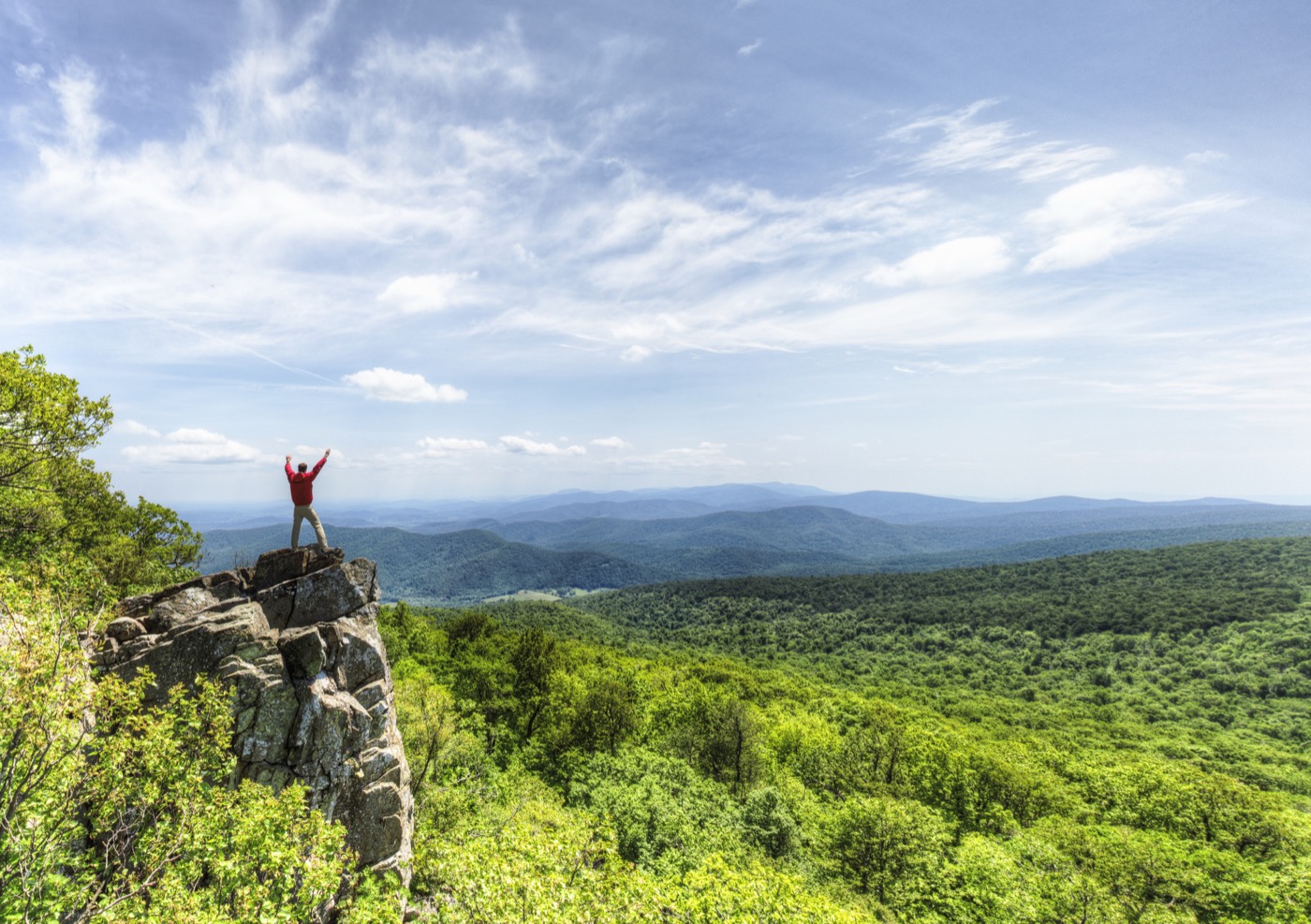
Shenandoah is long and skinny: a 105-mile ribbon of Skyline Drive running down the Blue Ridge of Virginia, with four entrances and no single "front door." Where you sleep decides how much of your day you spend driving versus hiking, so it's worth a few minutes of thought. Here's the breakdown of your three real options: gateway towns, the in-park lodges, and the campgrounds.
First, understand the geography
The park has four entrances: Front Royal at the north, Thornton Gap and Swift Run Gap in the middle, and Rockfish Gap at the south (where the Blue Ridge Parkway begins). Skyline Drive connects them all, but the speed limit is 35 mph and the road curves constantly, so figure roughly an hour to drive 35 miles. So "near Shenandoah" depends entirely on which trails you're aiming for.
- Going for Old Rag, Whiteoak Canyon, or Dark Hollow Falls? Base in the central district: Luray or Sperryville.
- Want the northern overlooks and Overall Run Falls? Front Royal puts you right at the gate.
- Heading south toward Riprap or to connect with the Blue Ridge Parkway? Waynesboro is your town.
Gateway towns
Luray is the most popular base, and for good reason. It sits just outside the Thornton Gap entrance, puts you close to the central district's heavy hitters, and has the most lodging, restaurants, and grocery options of any gateway. It's also home to Luray Caverns if you need a rainy-day or kid-friendly backup. The trade-off: it's the busiest and priciest gateway, and fall weekends book out far ahead.
Front Royal anchors the north end. It's a genuine small town with a walkable main street, solid for an early start on the northern section. Quieter and often cheaper than Luray, but you're a long way from the central trails. Don't base here and expect a quick run to Old Rag.
Sperryville is tiny but charming, just outside Thornton Gap and the closest civilization to the Old Rag parking area. Limited lodging and dining, so it suits people who want a low-key, hike-focused trip over a town with options.
Waynesboro covers the southern end near Rockfish Gap. Bigger than Sperryville, with chain hotels and groceries, and the natural pick if you're combining Shenandoah with the Blue Ridge Parkway. The downside is the same as Front Royal in reverse: you're far from the central-district trails.

In-park lodges: Skyland and Big Meadows
There are two lodges directly on Skyline Drive, both run by the park concessioner and open roughly spring through late fall.
- Skyland (around mile 41–42) sits at the park's highest point and has the famous panoramic dining-room view. It's the trailhead for Stony Man, one of the easiest big-payoff summits in the park.
- Big Meadows (around mile 51) is more central, near the Byrd Visitor Center, the open meadow, and the trailhead for Dark Hollow Falls, the park's most-visited waterfall.
The pros: you wake up inside the park, skip the entrance line, and can hit trailheads before the crowds arrive. For sunrise and stargazing (Shenandoah has genuinely dark skies), that's hard to beat.
The cons: the rooms are dated and not cheap for what you get, they book out months ahead for fall foliage, and there's no air conditioning in some units (the mountain runs about 10°F cooler than the valley, which helps). Treat them as a location splurge, not a luxury one.
Campgrounds
If you'd rather camp, Shenandoah has several front-country campgrounds along Skyline Drive, including Mathews Arm in the north, Big Meadows in the center (the most popular and the one to reserve early), Lewis Mountain, and Loft Mountain in the south. Most are reservable through Recreation.gov and fill up on summer and fall weekends.
- Pros: by far the cheapest way to sleep inside the park, and you get the same early-trailhead and dark-sky advantages as the lodges. Big Meadows campers are steps from Dark Hollow Falls.
- Cons: mountain weather swings hard, so pack layers and a rain plan. Black bears are active, so food storage rules are strict and enforced. Backcountry camping is allowed with a permit if you want to get further from the road.
So where should you actually stay?
For a first family trip focused on the big central-district hikes and waterfalls, base in Luray. It's the best balance of access, food, and a backup plan for bad weather. If you want the in-park sunrise experience and can book early, Big Meadows (lodge or campground) is the most central spot on Skyline Drive. Save Front Royal or Waynesboro for trips weighted toward one end of the park.
Planning the trip? Nestward builds a day-by-day plan in minutes, free, no subscription. See how it works →