 Nestward
What to See at Craters of the Moon
A half-day of lava cones, caves, and the darkest skies in Idaho.
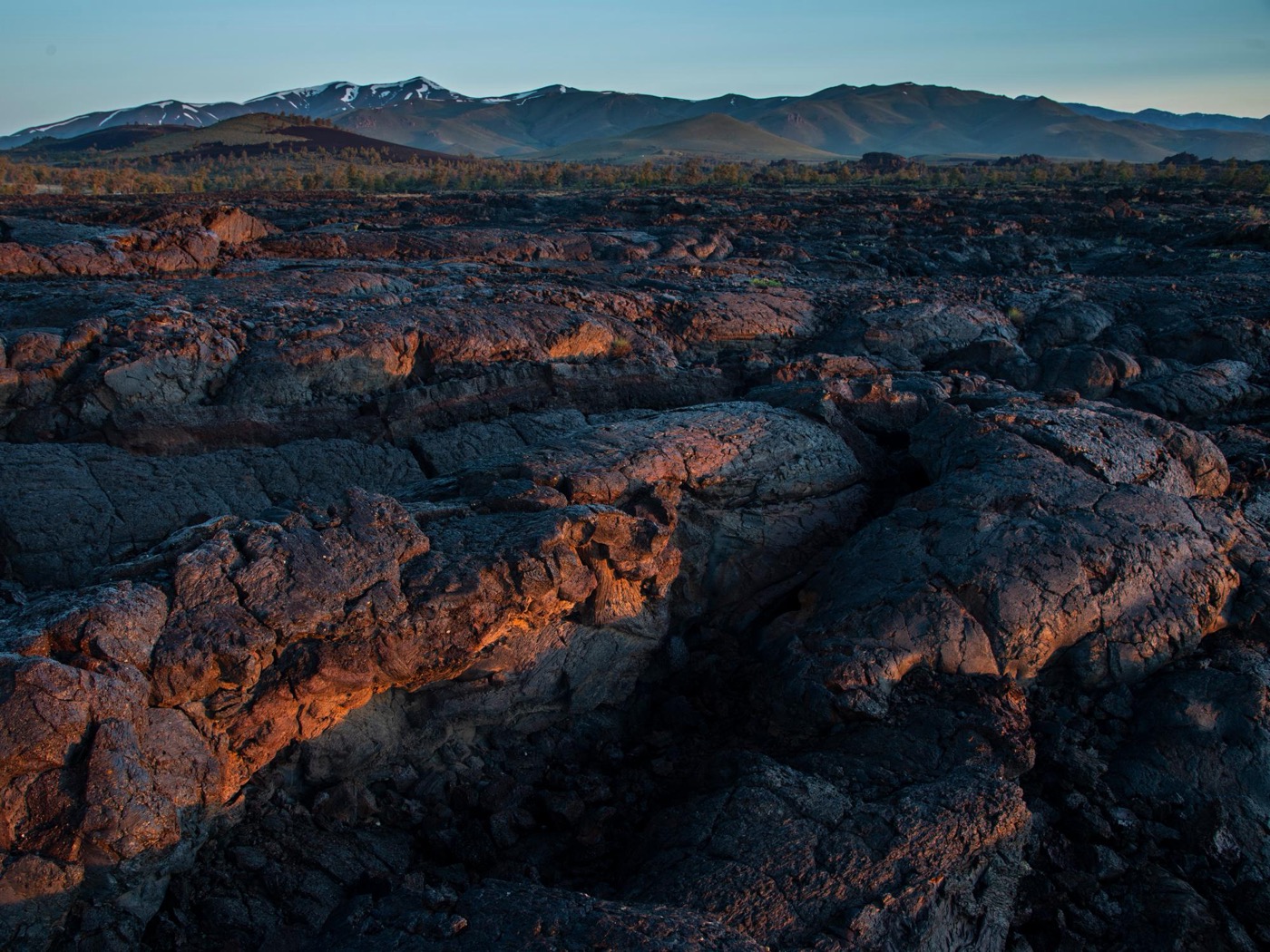
Craters of the Moon is a vast ocean of lava flows with scattered islands of cinder cones and sagebrush, a "weird and scenic landscape" where yesterday's volcanic events are likely to continue tomorrow. It's compact, it's strange, and it rewards a short stop far more than its remote location suggests. You can hit the highlights in three or four hours, and the kids will remember the lava tube long after they forget the visitor center.
Drive the Loop and climb Inferno Cone
The 7-mile Loop Road is the spine of a visit, and it's typically open from mid-April through late November as conditions allow. Pull off at the marked stops. They're close together and each one is a quick walk.
The single best view comes from Inferno Cone. It's a short, steep slog straight up a cinder slope with no switchbacks, which sounds worse than it is. Most people are at the top in 10 to 15 minutes. The reward is a 360-degree panorama across the whole Great Rift, with the Pioneer Mountains on one side and an endless black lava sea on the other. Bring water; the dark cinders bake in summer sun.
Walk the Spatter Cones and lava trails
- Spatter Cones: A flat, paved path leads to a cluster of miniature volcanoes you can peer right down into. This is the easiest big payoff in the park, toddler-friendly and genuinely strange.
- Devils Orchard Nature Trail: A short, accessible loop through lava fragments and twisted limber pines. Good interpretive signs, good for stretching legs.
- North Crater Trail: A longer option that climbs past volcanic features and crater walls if you want more than a stroll.
- Tree Molds Trail and Broken Top Loop: Out past the developed area, these reach the wilderness edge and the cavities where lava once encased living trees. Quieter, and a step up in effort.

Go underground at Indian Tunnel
Craters' lava tubes are the part most people don't expect, and Indian Tunnel is the showpiece: a large, partially collapsed cave you can walk through with light spilling in from openings overhead. A few caves require some clambering and a real flashlight (phone lights are weak here). Two practical notes: you'll need a free cave permit from the visitor center, part of the white-nose syndrome screening to protect bats, and sturdy shoes matter because the lava is sharp. It's the highlight for most kids.
Stay after dark for the stars
Craters of the Moon was designated an International Dark Sky Park in 2017, and it's one of the best places in the country to stargaze. There's almost no light pollution for a hundred miles. On a clear, moonless night the Milky Way is genuinely jaw-dropping, and the park runs astronomy programs in summer. If you can swing a night here (or even just linger past sunset before driving on), do it. This is the reason to time your visit, not the lava.
Know before you go
- Where it is: 18 miles southwest of Arco, Idaho on US-20/26/93, about 84 miles from Idaho Falls and 90 from Twin Falls. It's a worthy detour, not usually a destination on its own.
- Cost: $20 per vehicle, good for seven days.
- Heat is the real hazard: Summer sun bakes the black lava to surface temperatures near 170°F, with afternoon winds of 15 to 30 mph. Go early, carry more water than feels necessary, and wear a hat.
- Winter: When the Loop Road closes under snow, it's groomed for cross-country skiing and snowshoeing, a quiet, beautiful, very different visit.
- For kids: Pick up a Junior Ranger booklet at the visitor center. The cave plus the spatter cones usually does the trick.
Planning the trip? Nestward builds a day-by-day plan in minutes, free, no subscription. See how it works →