 Nestward
What to See at Colorado National Monument
The big red-rock canyons next door to Grand Junction, Colorado.
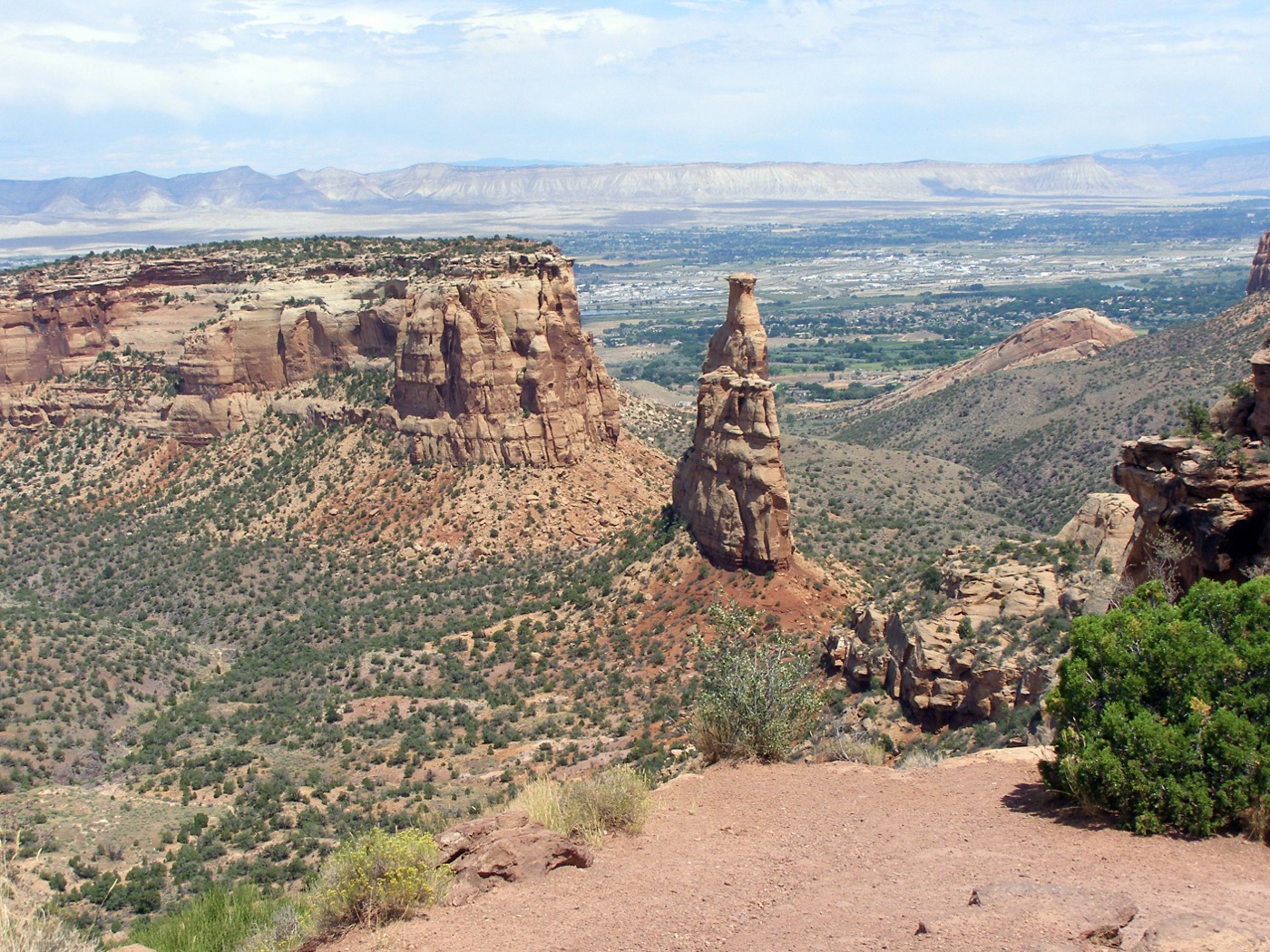
Colorado National Monument is a 23-mile scenic drive carved into the edge of the Colorado Plateau, with towering sandstone monoliths, sheer red canyons, and big views over the Grand Valley. It's compact enough to see the highlights in a few hours, but rewarding enough to spend a full day. Set your expectations as "smaller, quieter Utah canyon country a few minutes from a real town" and you'll love it.
Rim Rock Drive: the main event
If you do one thing here, drive Rim Rock Drive. The Civilian Conservation Corps built it in the 1930s, and it twists along the canyon rim through tunnels and switchbacks for about 23 miles between the Fruita (west) and Grand Junction (east) entrances. Plan on at least 45 minutes one way without stops, and a lot longer once you start pulling over.
The overlooks are the reason to go slow. Highlights worth a stop:
- Independence Monument: the park's signature 450-foot sandstone tower, best seen from the overlook of the same name.
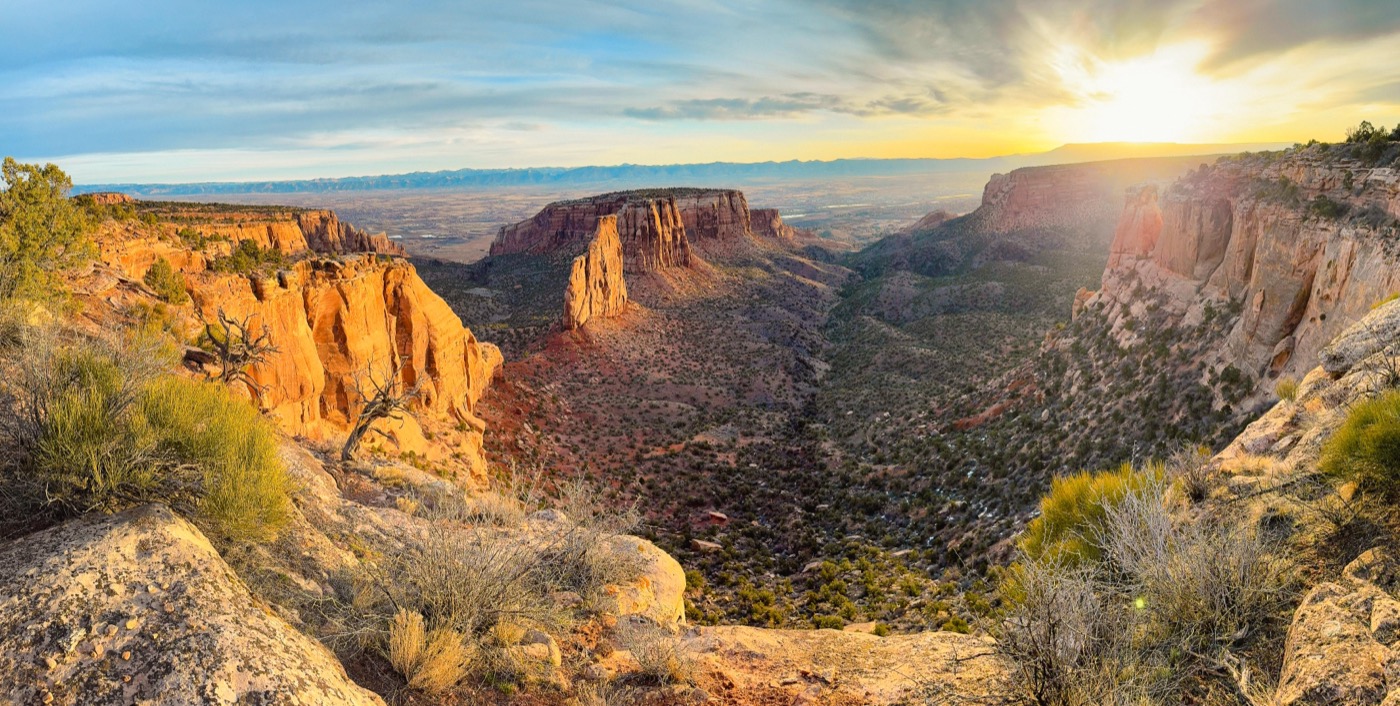
- Monument Canyon: deep, sheer-walled, and glowing at sunrise.
- Balanced Rock: exactly what it sounds like, a great quick photo stop on the west end.
- Upper Ute Canyon: a quieter pullout that's especially good at sunset.
The drive is open 24 hours, year-round, and only closes for snow, ice, or rockfall. Note there's no gas, food, or store along it, so fuel up in town first.
Short hikes the whole family can do
You don't need to be a backpacker to get off the road here. Start at the Saddlehorn Visitor Center, near the west entrance, which is also where several short trails begin and where the rangers can match a hike to your crew. Good options for families:
- Short hikes from Saddlehorn: a cluster of brief rim trails to overlooks, ideal for little legs and big views without much climbing.
- Devils Kitchen: a fun, slightly scrambly hike near the east entrance that ends in a natural rock "room" framed by boulders. Kids love it; just keep an eye on them near edges.
- Monument Canyon Loop and the Ute Canyon Trail: longer, into-the-canyon hikes for older kids and adults who want to feel small under the cliffs.
Whatever you pick, carry more water than you think you need. This is high desert, and summer afternoons can hit 100°F.
Wildlife and the Junior Ranger program
Desert bighorn sheep are the headline animal, and they're genuinely often seen along Rim Rock Drive, sometimes right beside the road. Eagles soar the canyons too. Early morning and evening are your best odds for both.
For kids, grab a Junior Ranger booklet at the Saddlehorn Visitor Center. It turns the overlooks and short walks into a scavenger-hunt mission and ends with a badge, which buys you a surprising amount of cooperation on a long scenic drive.
Other ways to see it
- Road biking: Rim Rock Drive is a bucket-list ride for cyclists, but it's a serious climb on a shared two-lane road with no shoulder. Strong riders only, and watch traffic.
- Rock climbing: Independence Monument and other towers draw experienced climbers; the annual tradition of summiting Independence Monument is part of the park's lore.
- Backpacking: the canyons have backcountry routes for those who want solitude, though water is scarce and shade is rare.
Practical logistics
- Entrance fee: $25 per private vehicle, good for 7 days. Annual park pass is $45. America the Beautiful passes work too.
- Getting there: From I-70, take Exit 19 (Fruita) for the west entrance or Exit 31 (Horizon Drive) through Grand Junction for the east entrance. The visitor center and campground sit about 4 miles up from the west entrance.
- Staying over: Saddlehorn Campground is the only in-park camping. Grand Junction and Fruita both offer plenty of hotels just minutes away.
- When to go: Spring and fall are ideal (70–85°F days). Summer is hot with afternoon thunderstorms; winter brings snow and ice that can briefly close the drive.
Planning the trip? Nestward builds a day-by-day plan in minutes, free, no subscription. See how it works →