 Nestward
What to See at Amistad National Recreation Area
A desert reservoir on the Texas border, built for water days and big sunsets.
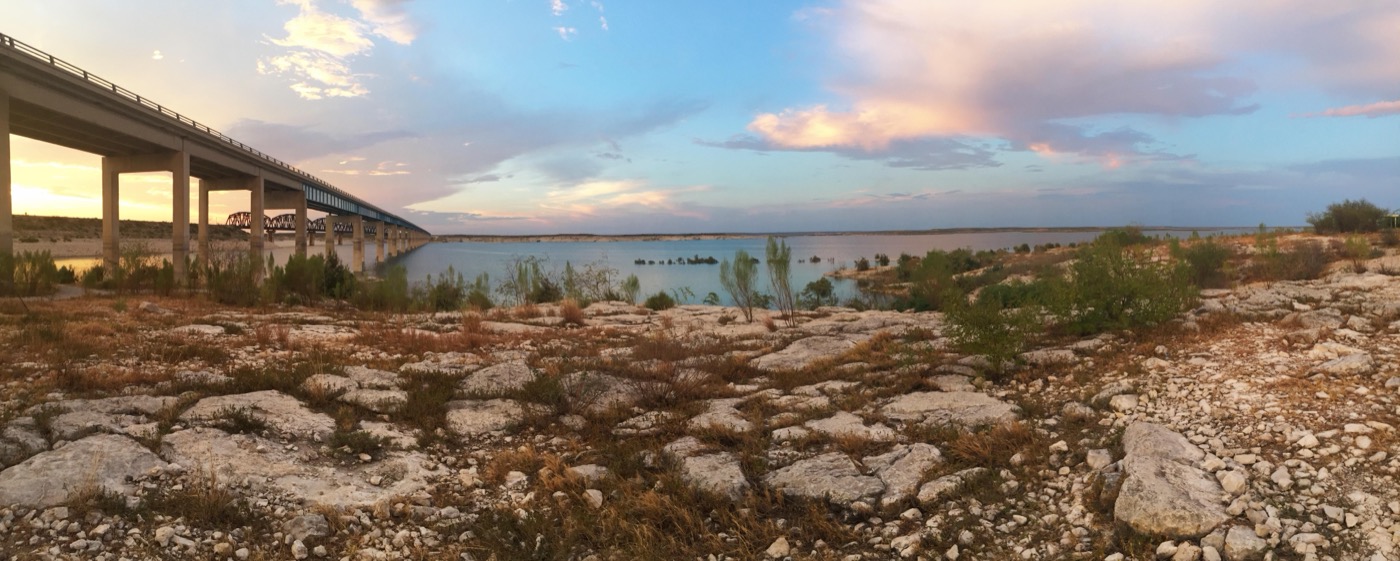
Amistad is not a postcard mountain park. It is a large international reservoir in the Southwest Texas desert, and the main event is the water: boating, swimming, and fishing on a lake that backs up into steep limestone canyons. Set your expectations for a water-and-sunset day, not a hiking trip, and it delivers.
The reservoir is the whole point
Amistad ("friendship" in Spanish) is the U.S. half of a reservoir shared with Mexico, formed where the Rio Grande, Devils River, and Pecos River meet. The park boundary follows the water a long way up each: 74 miles up the Rio Grande, 25 up the Devils, and 14 up the Pecos. Out on a boat you trade open water for narrow, steep-walled canyons and quiet coves. The international border runs through the lake, marked by buoys numbered RG1 to RG28 along the old river channel, worth pointing out to kids since you can genuinely see another country across the water.
One caveat that shapes any visit: lake levels swing a lot. In low-water years the shoreline retreats and you may have to walk farther (sometimes over rough, rocky ground) to reach the edge. Some boat ramps close depending on conditions. Call the visitor center the morning you go.
Governors Landing for an easy water day
If you have one afternoon and no boat, go to Governors Landing. It is the popular day-use area for swimming and picnicking, with parking, picnic shelters, and vault toilets, and you walk down to the water from the lot. There are no lifeguards anywhere in the park, so this is swim-at-your-own-risk territory. Life vests are strongly recommended for everyone, and the park suggests keeping water play to daylight hours. Summers here are hot, which is exactly why locals come to swim, and the mild weather often stretches the season into fall.
Stretch your legs on the Diablo East Nature Trail
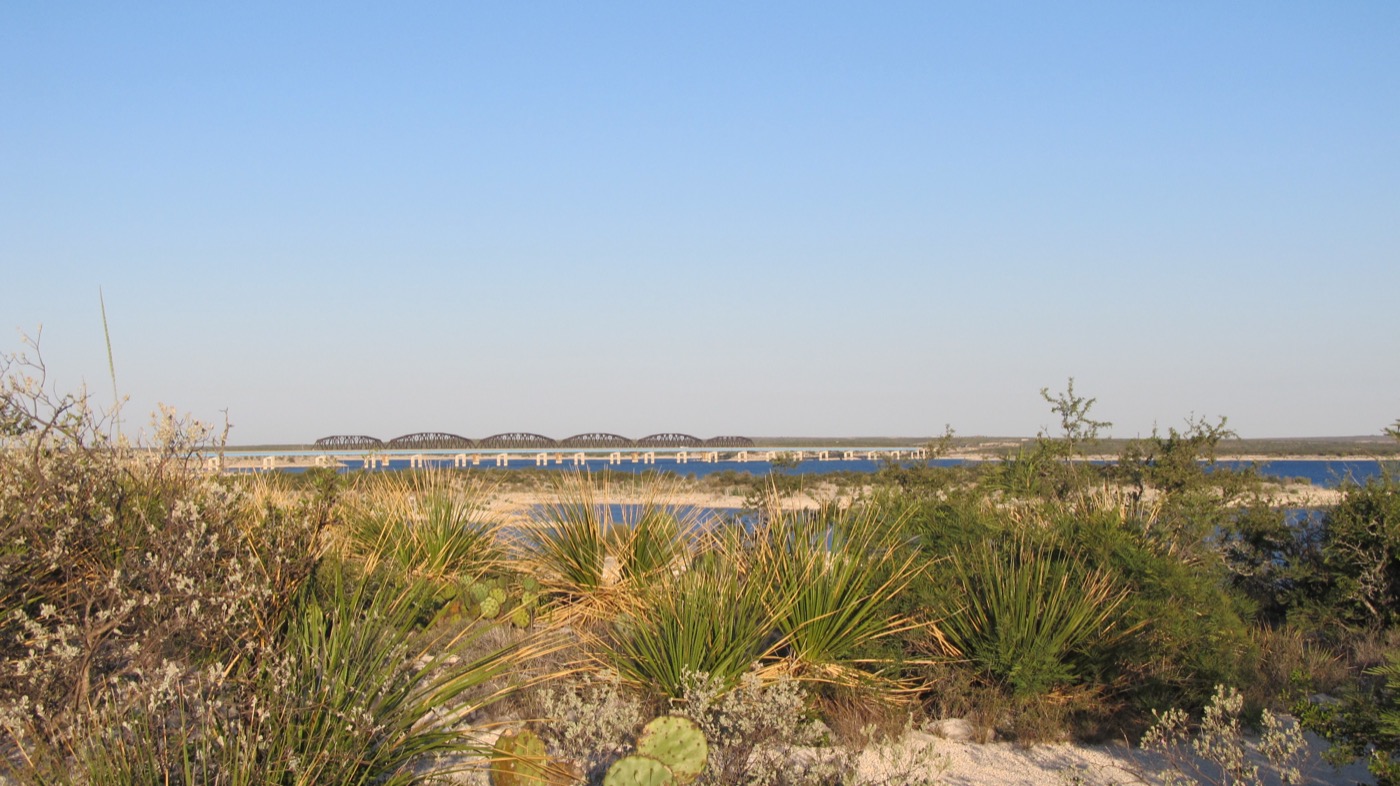
Hiking is a side dish at Amistad, not the main course, but a couple of short trails give you wildlife watching, lake views, and a bit of quiet. The best pick for families is the Diablo East Nature Trail, an easy-to-moderate loop of about 0.3 miles. The trailhead sits at the corner of the Diablo East parking lot, just down the sidewalk from the Ranger Station. Note there are four large steps down to start, then mostly level dirt and gravel. It is an interpretive trail, so you'll read about desert plants while taking in sweeping views of the lake. Quick and doable with kids.
- Bring water, a snack, and real sun protection. There is little shade out here.
- Surfaces are compacted, uneven soil; closed-toe shoes beat sandals.
- Dogs are welcome on a 6-foot leash, and you pack out the waste.
If you bring (or rent) a boat
Boating is what Amistad does best, and it opens up the canyons and protected coves you can't reach on foot, plus the park's best fishing and primitive camping spots. A few practicalities to know before you launch:
- Lake use fee: any watercraft needing state registration pays a fee: $4 for a day pass, $10 for three days, or $50 annually. Senior and Access pass holders get 50% off. Pay at the visitor center (8 am–4:30 pm) or at automated machines near Diablo East, Rough Canyon, or Box Canyon.
- Ramps: the main launches are Diablo East, Rough Canyon, Box Canyon, and the Air Force's Southwinds Marina, with more at Blackbrush Point, 277 North/South, and elsewhere. Which are open depends on water level, so check first.
- Clean, Drain, Dry: follow it to keep invasive species out, and have everyone wear a life jacket on the water.
Logistics worth knowing
The visitor center is at 10477 Highway 90 West in Del Rio, about 7 miles west of town and 160 miles west of San Antonio on US 90. It also makes a logical stop on the long drive toward Big Bend, roughly 230 miles farther west. The park is open year-round, with hot summers and mild winters. Weather here can flip in minutes, so check the forecast the day of. Beyond the water, there's deep human history at Amistad, with cultural sites going back nearly 5,000 years; the Junior Ranger program is a good way to get kids engaged with that story.
Planning the trip? Nestward builds a day-by-day plan in minutes, free, no subscription. See how it works →