 Nestward
A First-Timer's Guide to Glacier National Park
What to know before your first trip to Montana's crown jewel
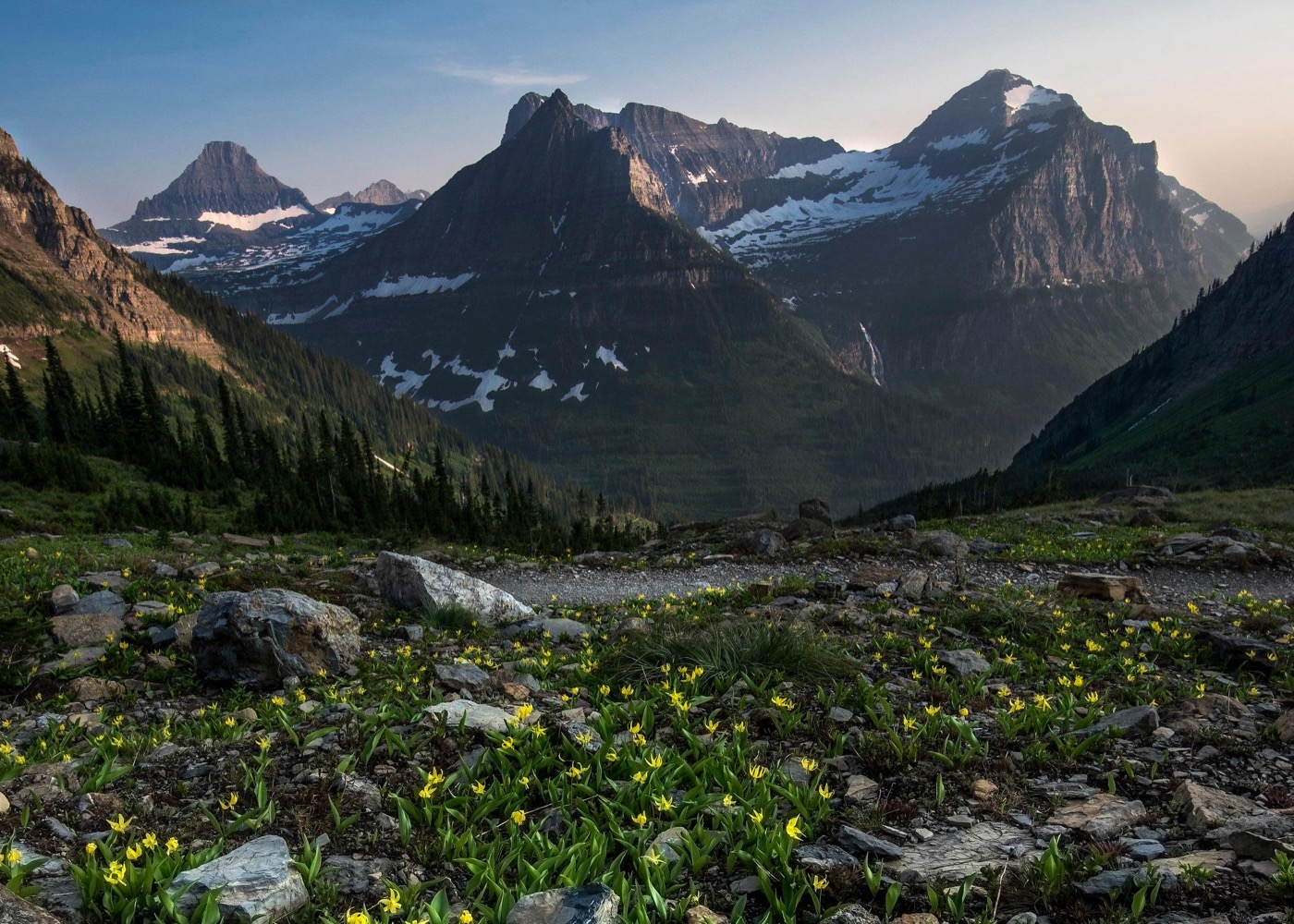
Glacier is a showcase of melting glaciers, alpine meadows, carved valleys, and spectacular lakes. Most first-timers underestimate how much the logistics matter. The park's short summer season, vehicle reservations, and that one legendary road can make or break a trip. Get those three things right and the rest is just scenery doing the heavy lifting.
When to go (the season is shorter than you think)
Glacier is technically open 24 hours a day, 365 days a year. But the park you came to see (the one with the open mountain road and the wildflower meadows) only fully exists for a few weeks.
- Mid-July to mid-September is the sweet spot. That's typically when the full length of the Going-to-the-Sun Road is plowed and open, and when high trails like the Highline are clear of snow.
- June is gorgeous and green, but the high section of the road often hasn't opened yet. Logan Pass may still be buried.
- Late September and October bring fall color and thinner crowds, but services start closing and the road can shut for the season after the first big storm.
The park's weather is genuinely variable. It straddles the Continental Divide, where warm Pacific air collides with cold Arctic air. Pack a fleece and a rain layer even in July. A sunny morning can turn into sleet at Logan Pass by afternoon.
The vehicle reservation thing (read this before you book)
The single biggest first-timer mistake is showing up without a vehicle reservation. In recent summers, Glacier has required a timed-entry reservation to drive the most popular corridors (including the Going-to-the-Sun Road) during peak hours. This is separate from your park entrance fee.
- The standard entrance fee is $35 per private vehicle, good for seven days.
- Reservation rules change year to year, so check the official Glacier page on nps.gov a few months out and again right before your trip.
- Two common workarounds: enter before the reservation window starts (often early morning) or after it ends in the evening. Early entry also means fewer crowds and better wildlife odds.

Going-to-the-Sun Road: the main event
This historic 50-mile road is the reason most people come, and it lives up to it. It climbs from forested lakeshore to the Continental Divide at Logan Pass, with pull-offs, waterfalls, and jagged peaks the whole way. A few first-timer notes:
- Drive it slowly and stop often. Plan a half to full day. It's not a commute. It's the destination.
- Vehicle size limits apply. Vehicles longer than 21 feet or wider than 8 feet aren't allowed on the alpine section. Leave the big RV at the campground.
- Use the free shuttle if parking at Logan Pass is full. By mid-morning in summer, it will be.
- Stop at Lake McDonald on the west side and the St. Mary Valley on the east for two completely different moods.
Best easy-to-moderate hikes for a first visit
With over 700 miles of trails, you can't do it all. Start here:
- St. Mary Falls: a short, family-friendly walk to a photogenic double waterfall on the park's east side. Great payoff for low effort.
- Hidden Lake Overlook: starts right at Logan Pass, climbs through wildflower meadows, and often comes with mountain-goat sightings. Snow can linger here into July.
- The Highline Trail: the iconic one, traversing a ledge along the Garden Wall. Stunning but exposed; better suited to confident hikers and older kids, not toddlers.
- Many Glacier area: on the park's northeast side, with classic lake-and-peak trails and some of the best grizzly-watching country anywhere. Worth the detour.
Glacier is serious bear country. Carry bear spray, know how to use it, make noise on the trail, and never hike with earbuds in. This isn't paranoia. It's basic park etiquette here.
Getting there and a few logistics
Glacier sits in the northwest corner of Montana (state code MT), along the spine of the Rockies. The nearest airports are in Kalispell (closest to the west side) and Great Falls. By car, Highway 2 runs along the southern boundary and Highway 89 reaches the east side. A rental car is essentially required.
- Base on the west side (West Glacier, Apgar) for easy road access and the airport. Base on the east side (St. Mary, Many Glacier) for drama and quieter trails.
- Lodging and campgrounds book out months ahead for summer. Reserve early or plan to stay in a gateway town.
- For families: the Junior Ranger Program is free and keeps kids engaged between hikes. Build in slow mornings, since altitude and big days wear little legs out fast.
Planning the real thing? Nestward builds a day-by-day plan for this park in minutes, free, no subscription. See how it works →